
Children are born curious. From the cradle, they observe, touch, taste, take things apart, and question everything, endlessly. Many parents want to do right by their child and try to boost their curiosity with activities, educational games and outings. The intention is admirable, of course, but there's a risk of overdoing it: in trying too hard to nurture curiosity, we can end up smothering it. The truth is simpler and far more reassuring: it's less about doing more, and more about protecting and gently guiding a curiosity that's already very much alive.
Here's how to support your child's natural drive, what the research tells us, and above all, how to avoid the trap of overdoing it.
Natural curiosity, the engine of learning
Psychologist Jean Piaget showed that a child isn't a vessel to be filled, but a little explorer. Indeed, children actively build their understanding of the world by handling things, testing them out, and getting things wrong. Natural curiosity is the fuel behind this process. It's what drives a child to figure out how things work, and it's by acting for themselves that they learn most lastingly.
Researcher Alison Gopnik even describes young children as true little scientists: they form hypotheses, run experiments, and observe the results. Understanding this changes everything for parents: your child doesn't need to be taught how to be curious — they already are. So your role is simply to give them a space where that thirst for learning can flourish freely.
The trap of overdoing it: when stimulation turns into overstimulation
That said, the desire to do the right thing can sometimes lead parents to fill every minute: structured activities, educational screens, a packed schedule. But an overstimulated child, constantly prompted from the outside, loses the habit of seeking things out for themselves. As a result, they come to wait to be entertained or told what to do, and their spontaneous curiosity fades. Ironically, too much on offer can kill the very spark it's meant to spark.
Stimulating isn't the same as saturating. Children need quiet, unplanned moments where nothing is scheduled, so their own curiosity can take the lead. Trusting that empty space, and resisting the urge to fill every silence with an activity, does far more to nurture curiosity than an overloaded programme ever could.

Following your child's questions rather than getting ahead of them
Around the age of 3–4 comes the age of why: an avalanche of questions, exhausting at times, but wonderful all the same. These questions are curiosity in action. Answering them with genuine interest, even briefly, without overwhelming your child with a flood of explanations, keeps their eagerness to understand alive. Even better: turning the question back to them — and what do you think? — encourages them to work it out for themselves.
The key is to follow your child's curiosity rather than get ahead of it. For example, a child fascinated by insects will learn a thousand things if you build on that passion, and very little if you steer them towards something else you deem more useful. Supporting their current interests means letting their curiosity chart the course — and that course always leads further than you'd expect.
The role of free play and boredom
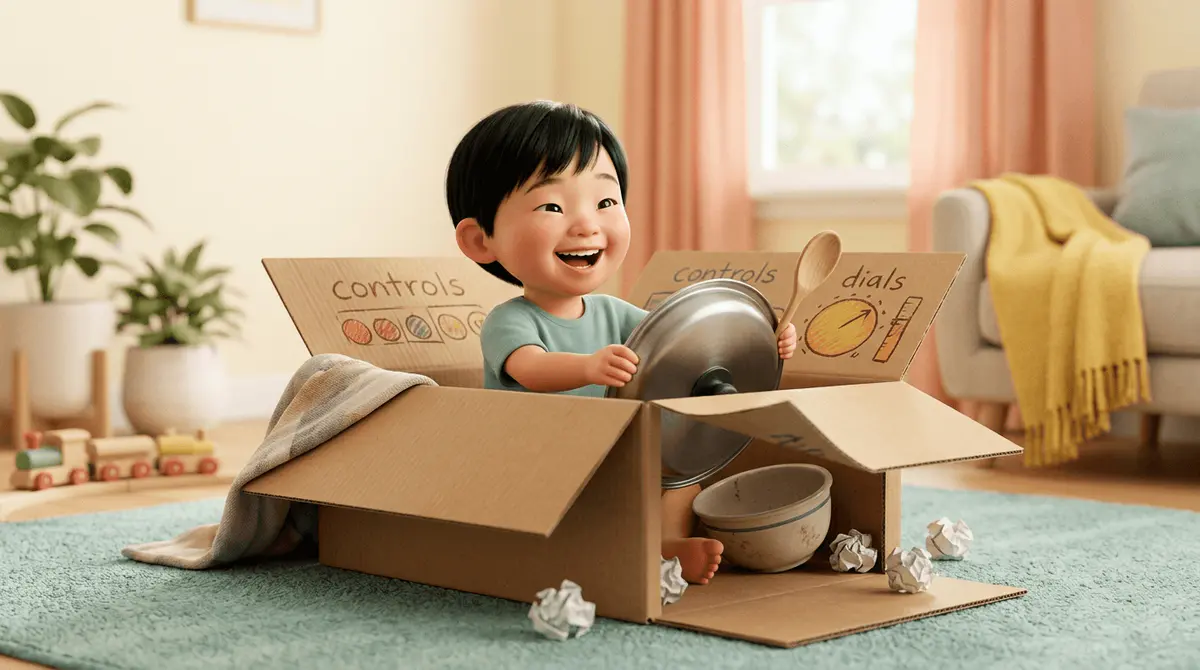
Free play, with no instructions or set goals, is one of the most powerful drivers of curiosity. It's by playing in their own way, inventing their own rules, and repurposing objects, that a child explores, tests and discovers. An empty box becomes a spaceship, then a den, then a drum: this freedom to invent nurtures the imagination and the taste for experimenting far better than any single-purpose toy.
As for boredom, often dreaded, it's actually a precious ally. A bored child is a child who'll have to invent something, and it's in that space that the richest ideas and games are born. Rather than instantly filling every I'm bored, let curiosity do its work: it almost always finds a way to occupy itself.
Cultivating everyday wonder
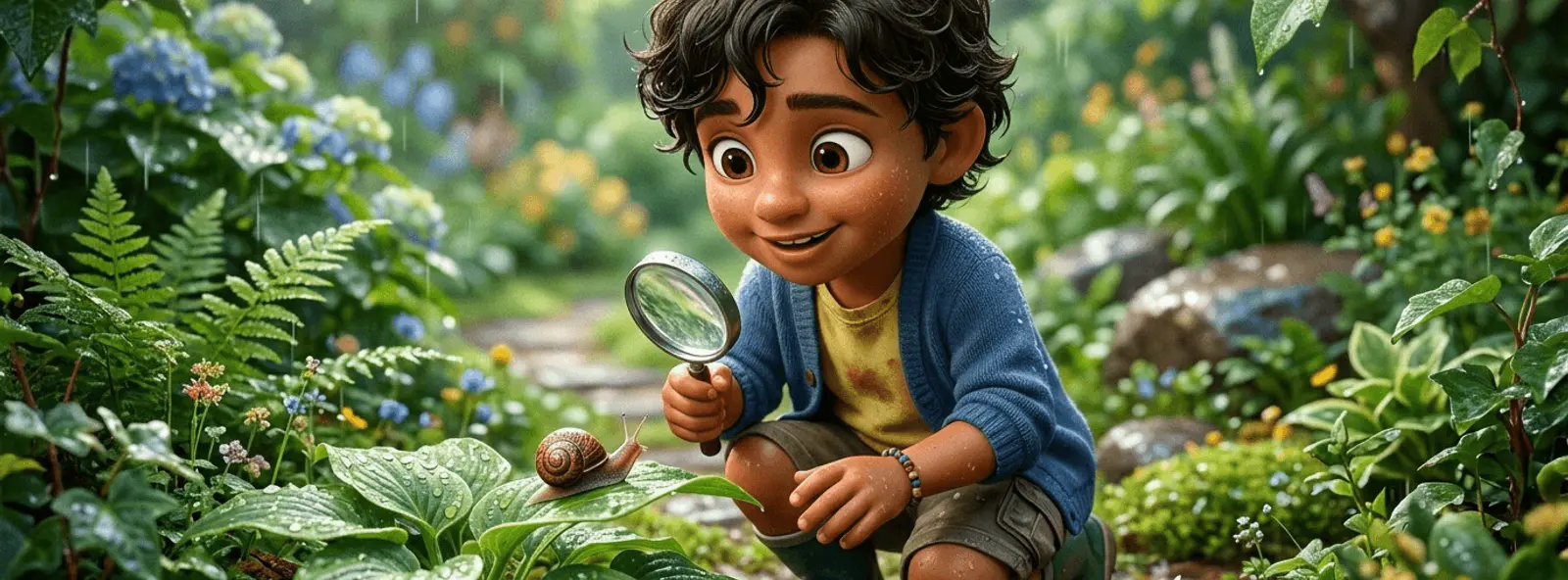
You don't need grand gestures to nurture curiosity: everyday life is full of opportunities. Stopping to look at a snail after the rain, watching the moon, cooking together, watching a seed grow. Wonder is cultivated in these small shared moments, when we take the time to see the world through a child's fresh eyes. Your own enthusiasm is contagious: a parent who marvels at things passes on the desire to marvel.
The secret often lies in an attitude: slowing down, observing alongside your child, asking open-ended questions rather than supplying every answer. I wonder why... opens up a space for reflection that's far more stimulating than a ready-made explanation. It's by sharing in the wonder, not by delivering knowledge, that the flame of curiosity stays alive.
Books, open doors to curiosity
Books are inexhaustible allies of curiosity. They open windows onto worlds, professions, eras and emotions, and feed the imagination without ever overloading it. Reading together offers a child a thousand starting points for new questions and new passions.
A book in which the child is the hero themselves multiplies this effect. What's more, you can create a book where your child sets off on an adventure and explores. Seeing themselves as curious, bold and capable of discovery, page after page, strengthens their taste for exploring in real life. It's one gentle way, among others, to support that curiosity, which most of the time simply needs room to breathe.
To find out more, the feature by Naître et Grandir on the importance of free play and the resources from Yapaka offer concrete, professionally validated guidance for parents.
Ultimately, nurturing a child's curiosity without overdoing it means accepting to do less. Fewer imposed activities, more free time; fewer ready-made answers, more shared questions. By protecting their natural curiosity, you welcome their whys and cultivate everyday wonder. In doing so, you give them the most beautiful gift of all: an intact desire to understand and explore the world for their whole life.