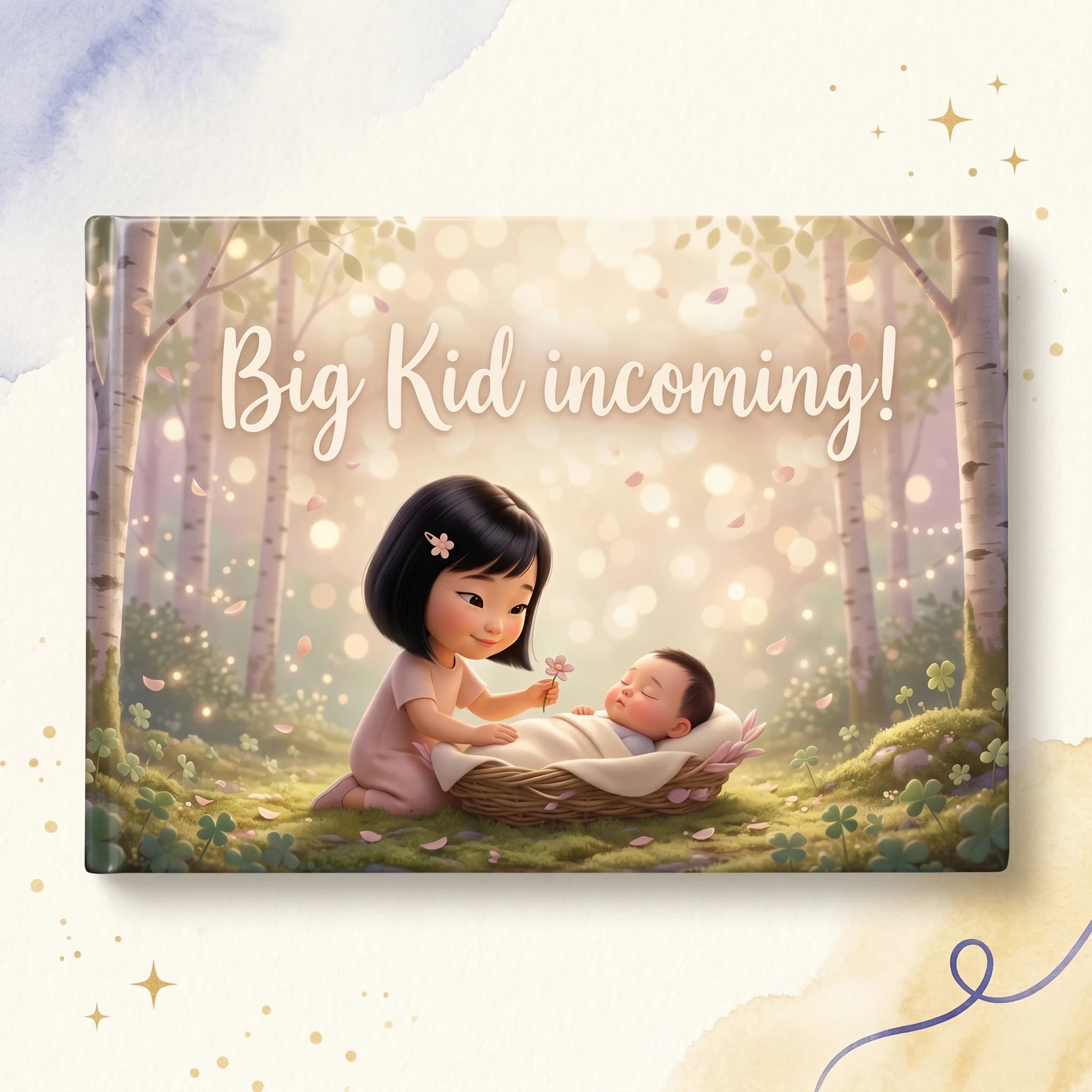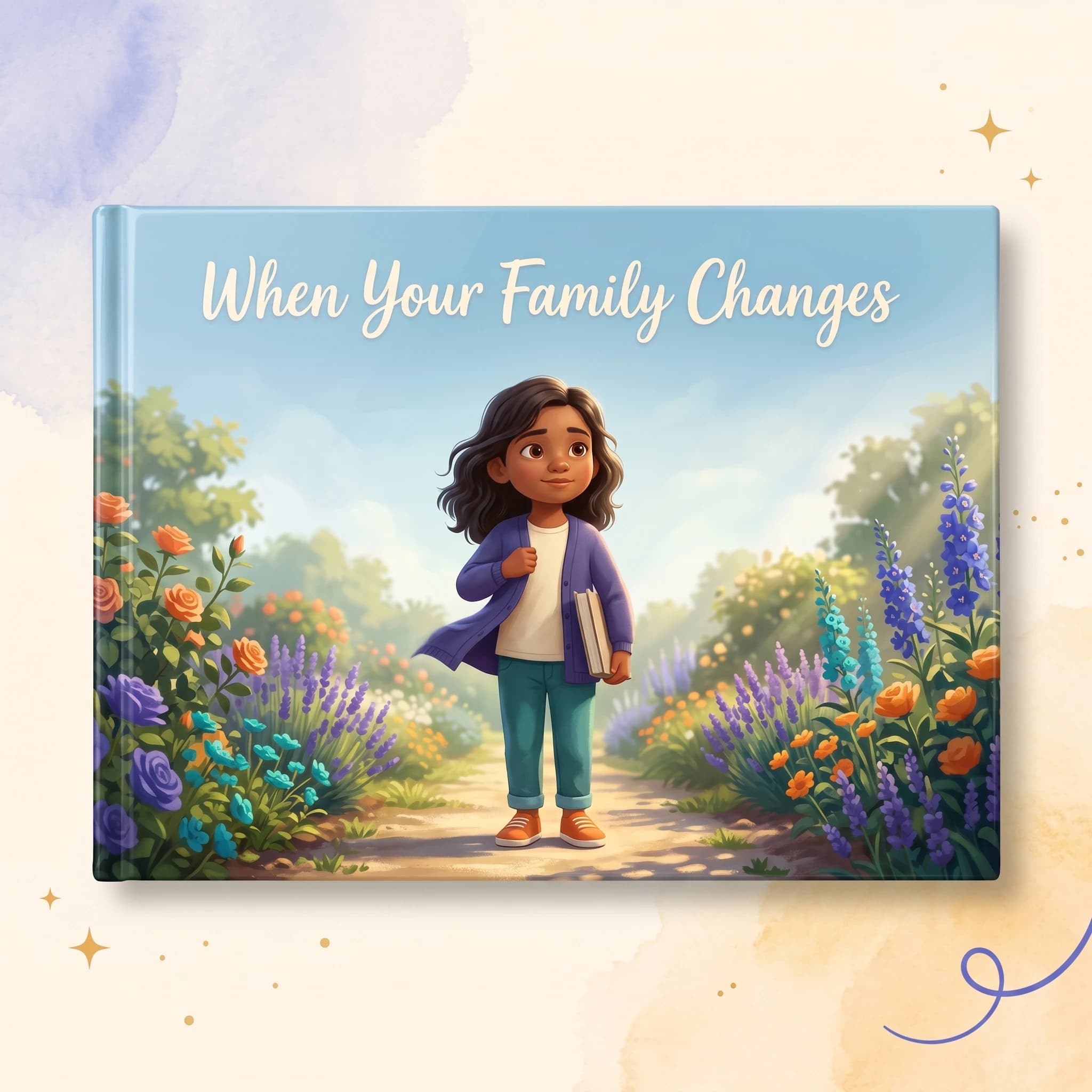
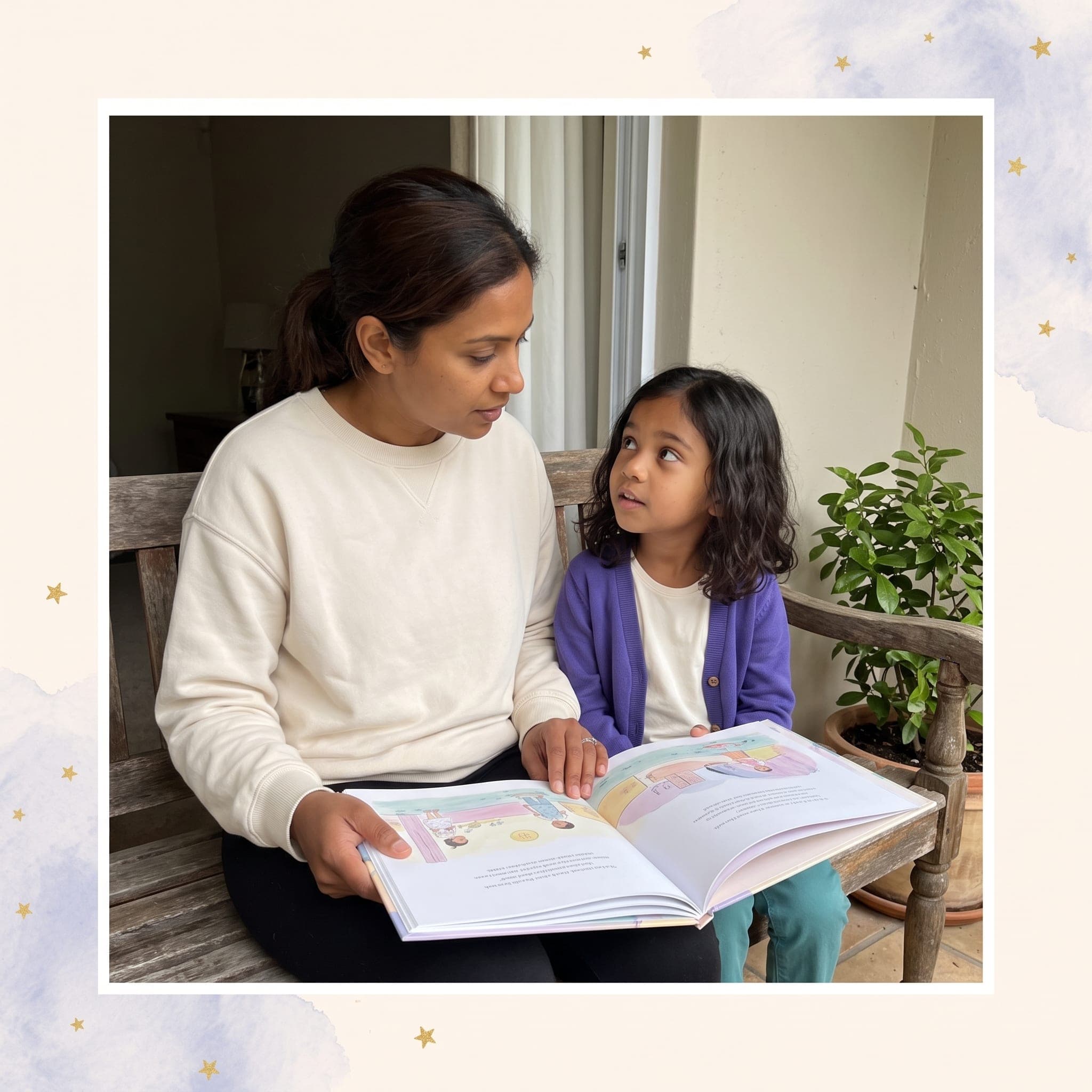



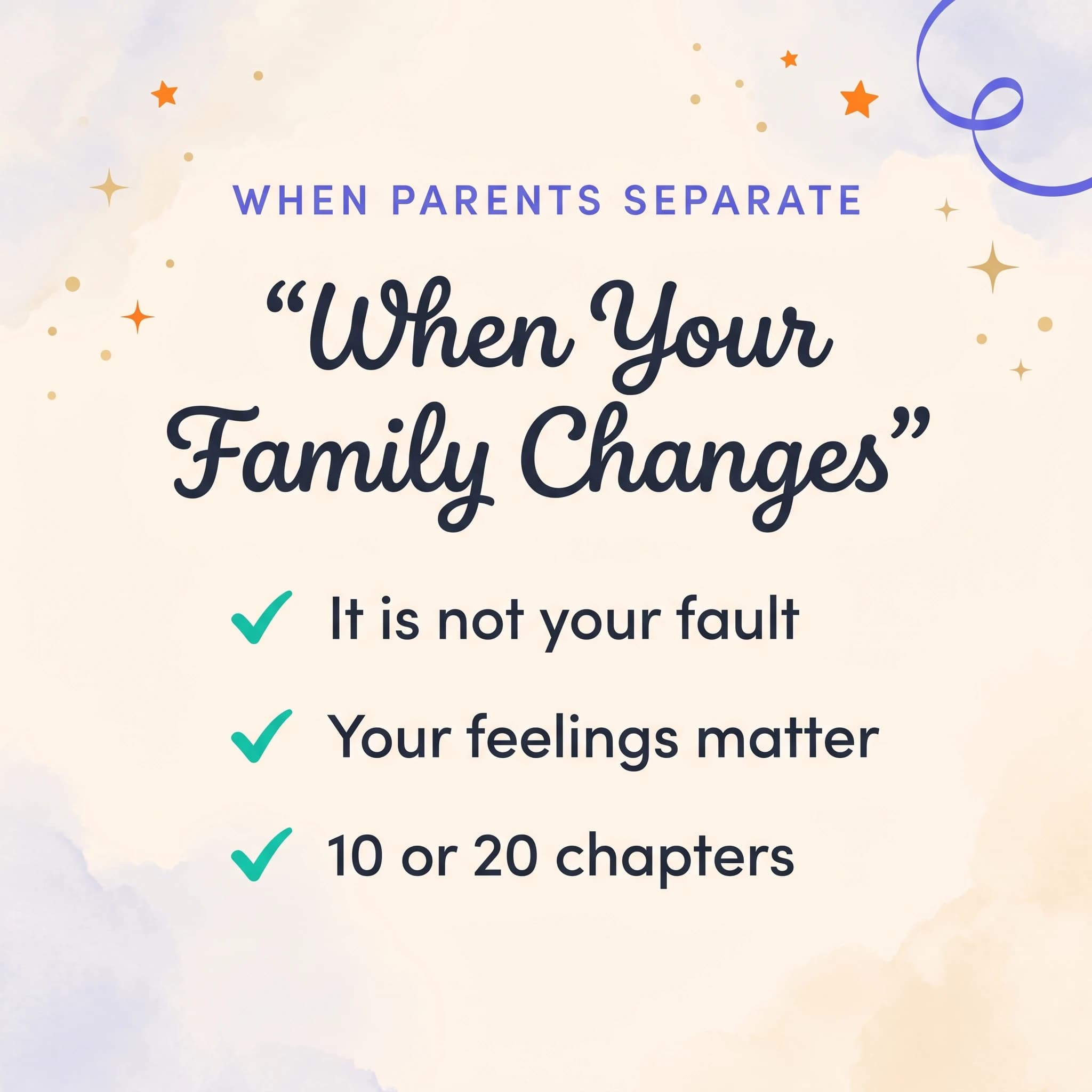
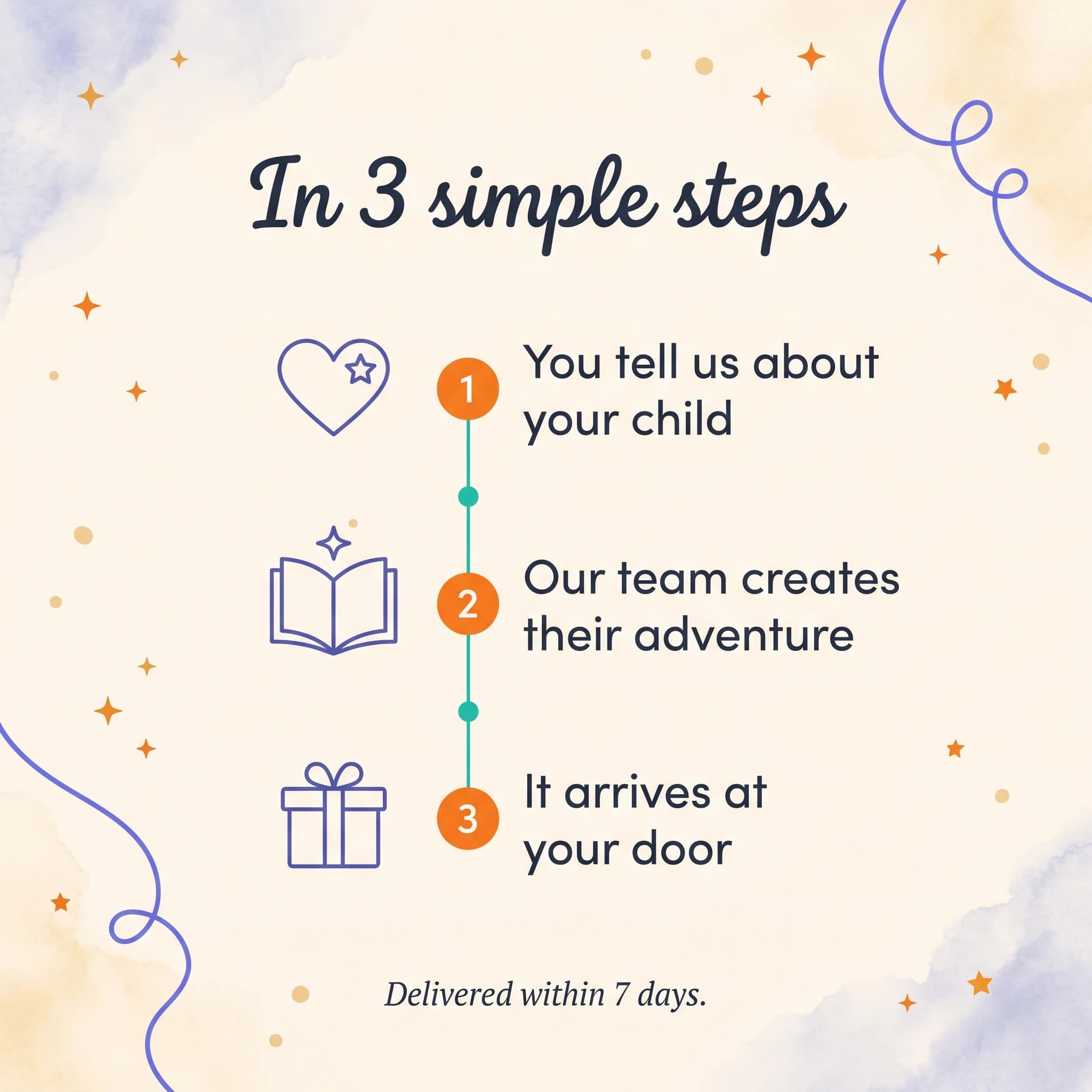

How do you talk to a child about their parents' separation without asking them to understand the problems between the adults? There are the words you find, the ones that stay hard to say, and the questions that come later. When Your Family Changes offers a story to read together, after an adult has given a first explanation. Your child sees their own name and face in everyday scenes where their feelings have a place.
A story told from a child's point of view
The story follows one thread: after the news, the child wonders what will happen to them. They find a familiar comfort, go through a moment of anger or missing someone, then dare to ask an important question. A small helper chosen just for them accompanies what follows. They don't have to become wiser to bring their parents back together, take sides, or comfort the adults.
The words stay simple and direct. The separation is named, without looking for someone to blame or recounting the couple's private reasons. Sadness can sit alongside a moment of play. The ending opens a space to keep talking; it doesn't ask the child to already be happy about all these changes.
Reassurance that respects your family
The loved ones you add to the story can support your child. A brother or sister may feel things differently, without the older one becoming responsible for the younger. The story assumes no two homes, no shared custody, and no reconciliation between the parents. What is unknown stays unknown: no visit or return date is promised just to reassure at all costs.
The preview lets you explore the story before going further. For a specific family arrangement or a situation that calls for particular support, our team can help you prepare the elements to include. The book serves as a reading and conversation aid, and does not replace that support.
Three age groups, two lengths
For ages 3–5, short sentences and familiar situations make room for first questions. For ages 6–8, the story separates the adults' decisions from the child's own small choices. For ages 9 and up, it also welcomes the need for privacy and mixed feelings, without talking down.
In 10 chapters, the book follows the first essential landmarks. In 20 chapters, the same transition is enriched with concrete moments: getting ready for tomorrow, keeping a memory, deciding what they want to share, and asking for help again when the sadness returns. It is always one continuous story, with your child at the center, to read at their own pace.