

Choosing a gift for a poorly child means turning all your usual instincts upside down. You want to keep them entertained, so you think big, colourful, absorbing. Yet a feverish or recovering child has very little energy and only a small space to play with, whether in bed or on the sofa. An ambitious game then becomes just another source of frustration.
Here are seven ideas designed specifically for this situation, along with what nearly always falls flat.
What changes when a child is unwell at home
Three constraints pile up, and they explain most gift-giving mistakes. Space, first of all: everything must fit on a tray or a duvet. Energy, next: their attention span drops to just a few minutes at a time.
Then there's boredom, which is really the heart of the matter. A child stuck in bed misses social life far more than activities. In practical terms, they don't just want something to do, they want someone to stay with them. The best gift often takes this into account.
One thing is worth stating clearly: depending on the illness, it's often better to choose things that can be washed or thrown away. Some hospital wards and situations require strict hygiene rules. So do ask before giving a large soft toy.
Three ideas to keep them occupied without wearing them out
1. The activity book that can be done in short bursts
Mazes, dot-to-dots, colouring, spot-the-difference. They do two pages, then stop, then pick it up again an hour later. That way, no single session needs to last more than five minutes. Expect to pay between five and twelve euros.
2. The magnetic games tray
Draughts, ludo, a magnetic ball maze. Nothing falls off when they turn over, which solves the main problem with playing games in bed. What's more, it's played with two people, so it creates a reason to sit and stay with them.
3. The audiobook or recorded story
When their eyes get tired or their head spins, listening is still possible. A recording of a story read by someone close to them works even better than a professional recording. Indeed, it's the familiar voice that soothes, not the sound quality.
Two ideas to ease the isolation
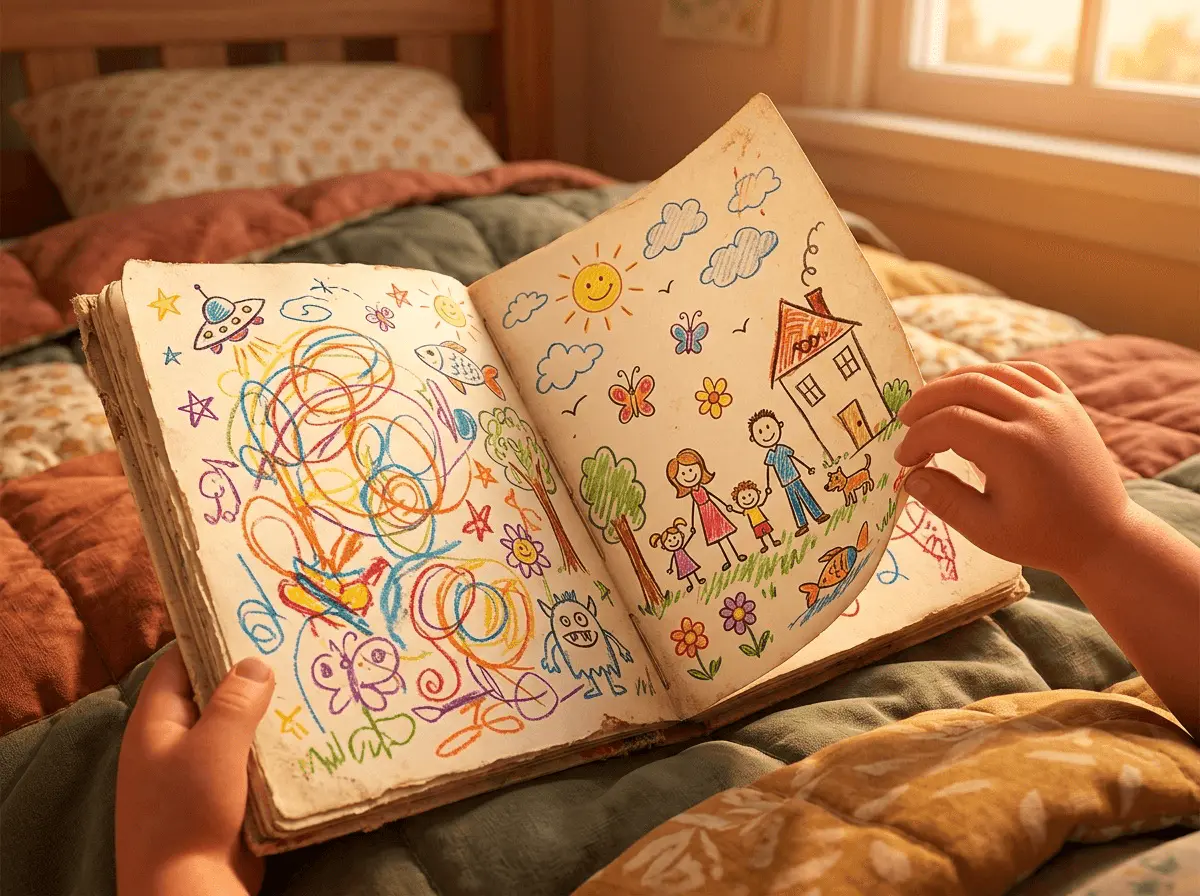
4. The friends' message notebook
A notebook you pass round at school or via other parents. Everyone writes a few lines or draws a picture. Zoé, six years old, read hers over twenty times during her week off with chickenpox. And this gift costs no more than a notebook and a handful of messages.
5. The scheduled video call
A call arranged with a cousin, a grandparent, a friend, at a set time. You wrap up a little calendar with the time slots marked. That said, keep it short: even fifteen minutes of chatting can genuinely tire out a poorly child.
Two ideas to support recovery
6. The long-term project that moves forward each day
A simple model kit, finger knitting, a herbarium, a themed sketchbook. This way, they make a little progress every day, giving some structure to days that otherwise all blur together. It also gives them something to show off in the evening.
7. The book where they become the hero of their own story
Their name, their face, an adventure made just for them. Seeing themselves as the hero at a time when they feel weak and low has a special effect. In short, it lets them take back an active role at the very moment everything is happening to them.
If this idea appeals to you, you can create the story where your child becomes the hero. Do bear the production time in mind: this gift suits a longer recovery better than a three-day bout of flu.
What almost always falls flat
The full board game tops the list of gift-giving flops. It needs a table, several players and a whole hour of attention. A feverish child gives up after ten minutes, left with a nagging sense of failure.
Second classic mistake: the gift that draws attention to the illness. The doctor's kit, the book about hospitals, the soft toy dressed as a nurse. The intention is kind, but children often prefer to think about something else. That said, these items work well before a planned procedure, as a way to prepare.
Third pitfall: overdoing it. Giving lots of gifts because they're unwell creates an association they'll pick up on very quickly. So keep things measured, even when you feel helpless, which is often the real reason behind the urge to buy more.

A gift for a poorly child is no substitute for being there
Every parent we speak to says the same thing, one way or another. What the child wants most is simply someone sitting on the edge of the bed. An object keeps them busy for an hour, whereas a presence carries them through the whole day.
If you're a relative or friend rather than a parent, your most helpful gesture is often elsewhere: looking after their siblings, bringing round a meal, offering a couple of hours to give the parent a break. Ultimately, easing the parent's load helps the child more than one more parcel ever could.
To help prepare a child for a medical procedure or a hospital stay, the Sparadrap association offers resources developed with healthcare professionals. A trustworthy source when words fail you.
They'll forget the toy within a fortnight. They'll remember who sat beside them.