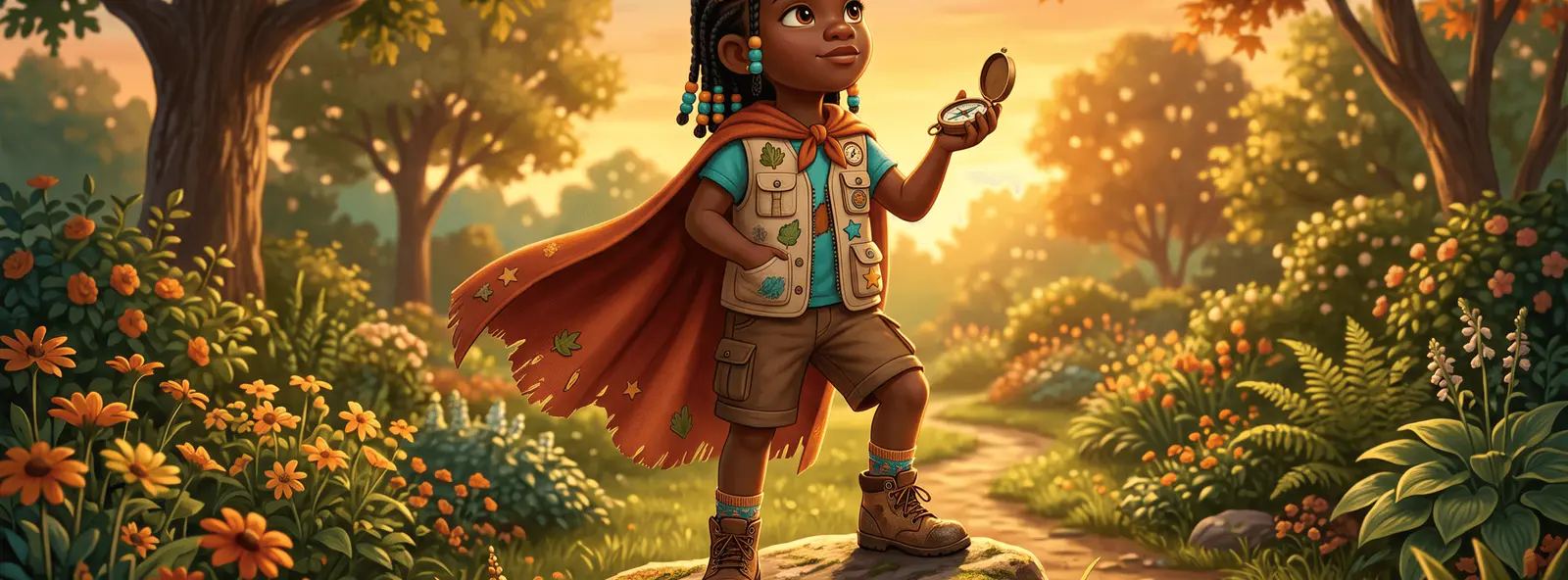

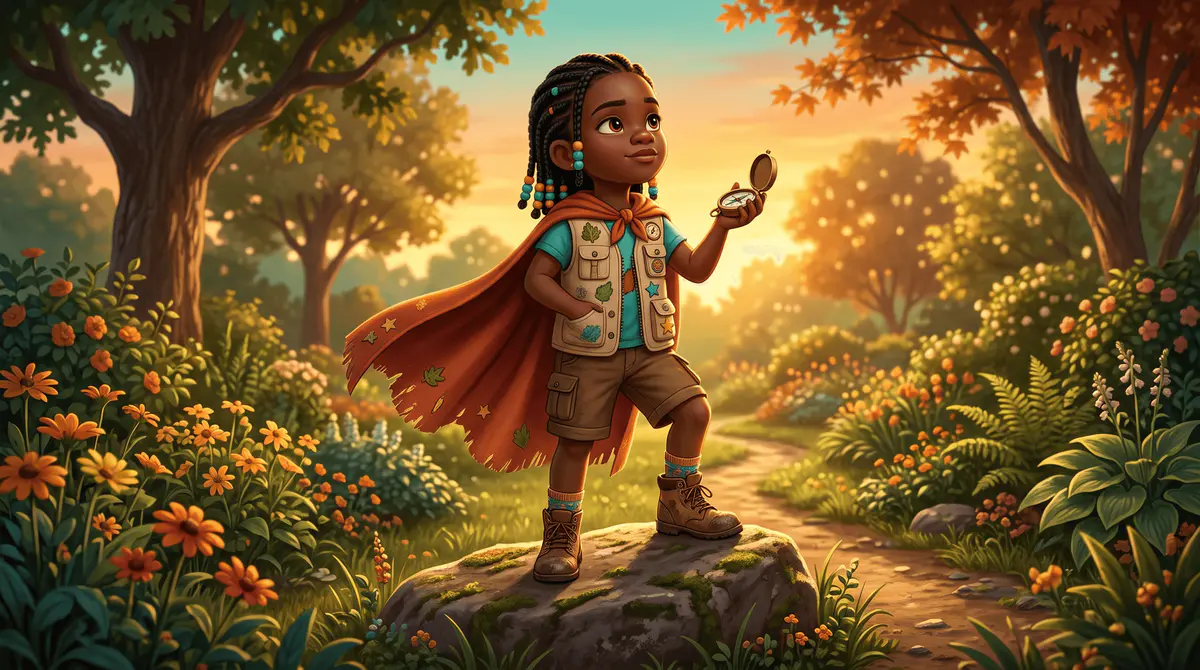
Little girls' favourite heroines no longer look much like the ones their mothers grew up with. Ask a five-year-old to name her favourite character. You'll rarely get a princess waiting to be rescued. You're far more likely to get an explorer, a vet, a heroine who runs.
This shift is worth pausing on, because it says something precise about how a child develops.
Why identifying with the hero matters so much
Albert Bandura showed as early as the 1960s that children learn enormously through observing role models. Indeed, they don't just copy actions: they absorb attitudes, ways of responding to obstacles. Fictional characters, in turn, work as full-blown role models.
In practical terms, a girl who follows a heroine solving her own problem takes in something different from a girl following a heroine who gets rescued. Of course, this doesn't determine a personality. Even so, the repetition of these stories sets a mental backdrop she projects herself into.
A point that's often overlooked: identification doesn't require physical resemblance. A little girl can identify perfectly well with a fox, a robot or a boy. However, she identifies more easily when the character acts rather than simply endures.
What princesses really say today
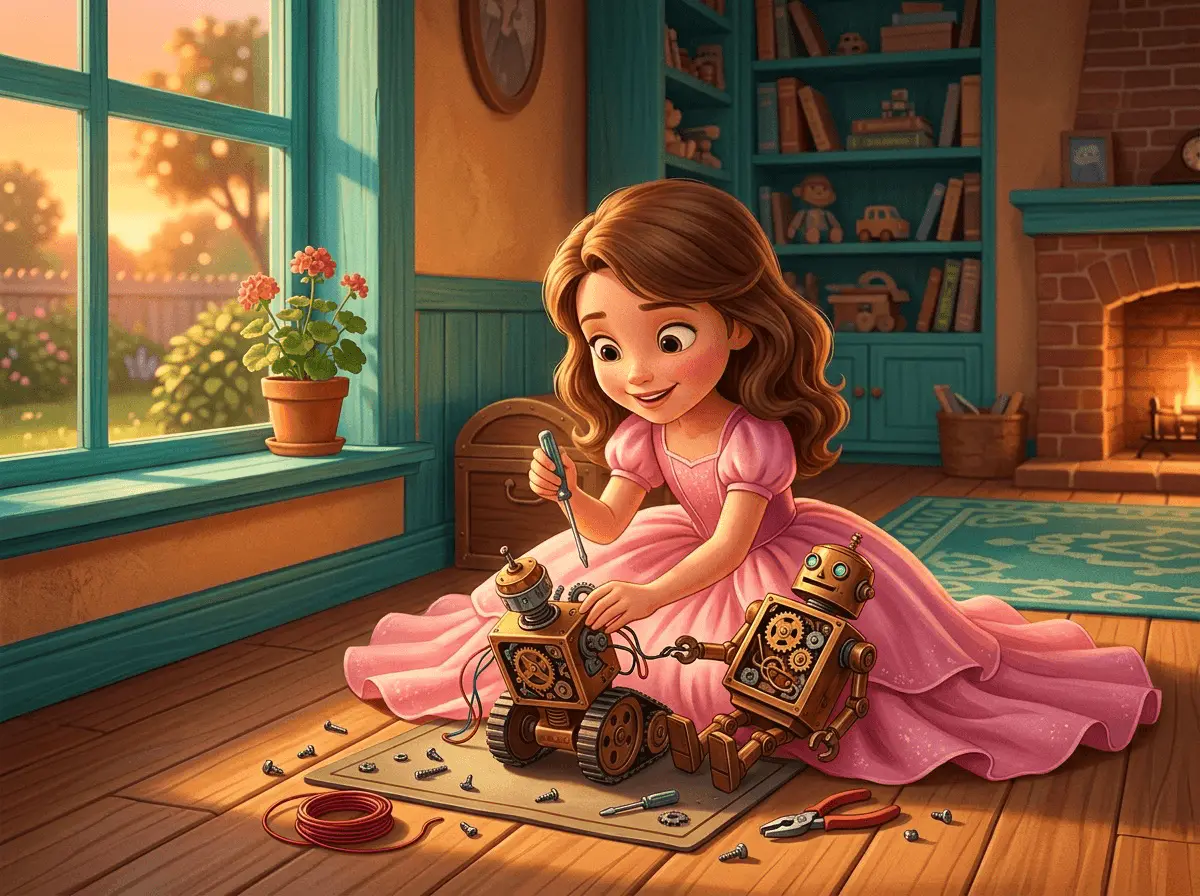
The princess remains hugely popular among children's favourites, and that's not a problem in itself. But the character has changed a great deal. The heroines of the last decade decide, set off, refuse, make mistakes, put things right.
So what adults dismiss as "another princess story" can sometimes be a tale of emancipation. In short, the costume is deceptive. A pink outfit can dress a heroine who crosses a kingdom alone and comes home having sorted everything out.
That said, there's a nuance worth noting. Some commercial spin-offs keep the dress and drop the action. There, the character becomes a backdrop rather than a role model. So it's a case of judging each story on its own, not by category.
Little girls' favourite heroines by age
Between two and four years old, they choose characters close to everyday life: familiar animals, children their own age, parental figures. How closely the character resembles their own life matters more than the adventure itself.
Between four and six comes the age of dressing up. At this stage, they want to embody the role: the outfit, the cape, the crown, the stethoscope. For example, the same child might be a vet on Monday and an explorer on Thursday, without seeing any contradiction in that.
After age seven, the criterion shifts. They look for capable heroines, ones who know how to do something specific. As a result, characters from series and comics start to overtake fairy-tale figures.
When a little girl prefers a male hero
Many parents worry about this needlessly. A child who chooses a male hero is generally choosing a story, not a gender. Action stories have long been written around boys, so the choice on offer still leans that way.
What's more, the reverse deserves the same calm response. A boy who loves a heroine isn't doing anything unusual, and pointing it out to him is enough to teach him he should hide it. In short, it's the adult's comment, far more often than the child's choice, that creates the problem.
What adults can do, without forcing it
The most effective approach isn't to ban a character. It's to widen the range available at home. In practical terms, a bookshelf where heroines who tinker, explore, lead and doubt all sit side by side does the work on its own.
A second, subtler lever: comment on the action rather than the appearance. "She was brave" opens up something different from "she's pretty". Indeed, children remember what adults point out, often more than what the story itself says.
A third, most direct lever of all: put her at the centre of a story herself. You can create the story where your daughter becomes the heroine, with her own name and face. Then she no longer has to choose between the role models on offer.
What this choice doesn't say about your child
A passion for one character predicts neither a personality nor a future. Tastes change three times a year at this age, and March's obsession will have vanished by October. So try not to read too much into it too quickly.
To understand why children become so attached to their characters, Naître et Grandir explains this attachment to book characters. Bandura's work on social learning, meanwhile, remains the go-to reference on the role of role models.
She'll change heroines four times before she turns ten. What will stay with her is the idea that a girl in a story can decide what happens next.