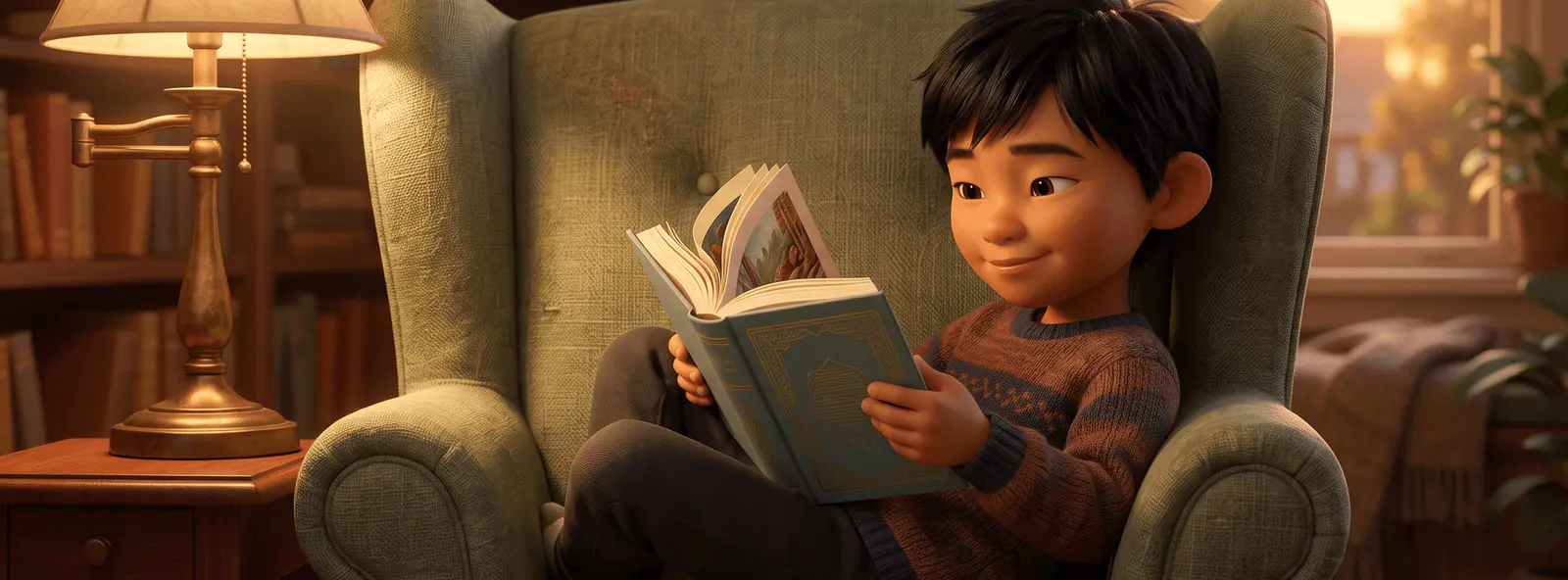

Choosing a book for an 8-year-old is about managing a transition, not a reading level. They read fluently, can follow a longer text, and understand irony. Yet picture books no longer satisfy them, while novels feel daunting. A hundred pages with no pictures can look, from the outside, like a wall.
Here's how to help them cross that bridge, with six formats that soften the fall.
What changes in the mind of an 8-year-old reader
At eight, decoding becomes automatic. Mental energy is then freed up for something else: following a plot, remembering characters, anticipating what comes next. That's exactly what a novel demands.
However, a new obstacle appears. They start comparing themselves to others, and reading becomes a social marker in the classroom. Some children label themselves "not readers" at this age, often after just one bad experience. That label can sometimes stick right through to secondary school.
A third factor comes into play: available time. Between school, sport and screens, reading loses out if it doesn't have a protected slot. In practice, a bedtime reading routine kept up at eight is worth more than ten lovely books given as gifts.
Three formats for starting the first novel
1. The short novel with very short chapters
Eighty pages, three-page chapters, a few illustrations still dotted about. They turn the pages quickly and can see their progress. This way, they finish a real novel without ever feeling like they were climbing a mountain.
2. The series, again and again
Same hero, same world, a new adventure. The second book takes half the effort of the first, since the setting is already familiar. What's more, finishing a whole series gives a sense of pride that ten stand-alone books simply can't match.
3. Comics and graphic novels
Many adults worry about an 8-year-old reading nothing but speech bubbles. Yet graphic novels can carry long stories, with genuine narrative arcs. They build the "long story" muscle, which is precisely what matters this year.
Three formats for a child who already calls themselves "not a reader"
4. An in-depth non-fiction book on their passion
Sharks, Egypt, volcanoes, football, minerals. With this, they'll read thirty pages on their favourite subject without even realising they're reading. And at this stage, that's exactly the goal: separating reading from schoolwork.
5. The choose-your-own-adventure book
Branching stories give children direct control over the plot. They decide, go back, start again. That said, this format wears thin quickly: stick to two or three titles rather than a whole shelf of them.
6. The book where they become the hero of their own story
Their name, their face, a story tailored just for them. At eight, they know perfectly well that the character isn't really them. In fact, it's precisely that awareness that makes the game work: they accept the pretence knowingly, just like an adult reader would.
For a child who resists novels, this format removes the main obstacle, which is rarely a technical one. You can create the story where your child leads the adventure and let them read it alone, with no questions at the end.
Books for 8-year-olds: what makes them give up
Three well-meaning habits produce the opposite effect. The first is introducing the classics too early. A nineteenth-century novel at eight mostly confirms that reading is a grown-up chore.
The second is ranking types of reading. Saying "that's just a comic" or "you could read a real book" can destroy the pleasure they've built up, in a single sentence. So keep that judgement to yourself, even if it's tempting.
The third, even more common: stopping bedtime reading aloud. Many parents stop around age seven or eight once the child can read alone. Yet listening to a story remains a different pleasure from reading it, and it doesn't disappear just because a child becomes independent.
How long, and when
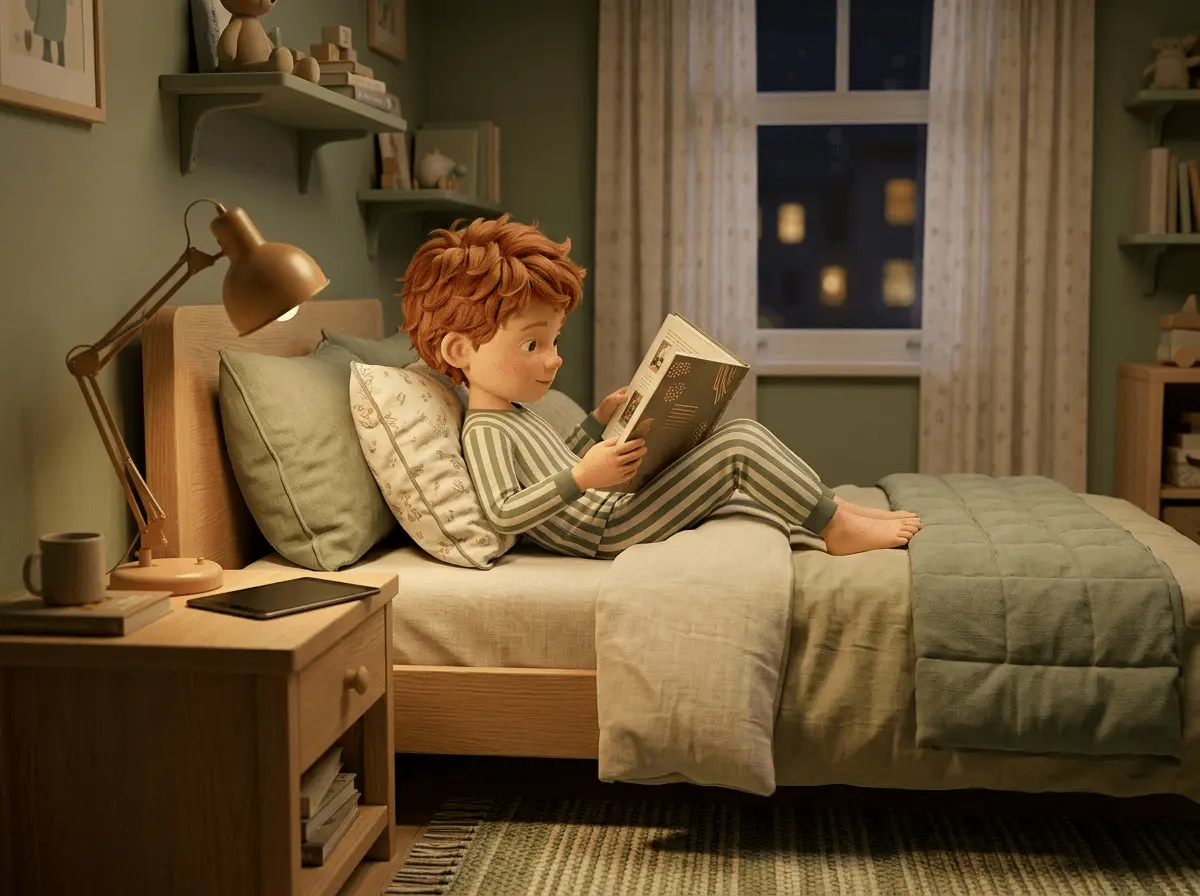
Fifteen to twenty minutes a day is plenty at this age. However, consistency matters more than duration. A quarter of an hour every day beats an hour once a week on Sunday.
In practice, the best slot is still the evening, screens off, tucked up in bed. What's more, an 8-year-old will happily trade ten extra minutes before lights out for some reading time, which suits everyone.
To understand what's really at stake in learning to read independently, Naître et Grandir explains how children learn to read. Worth a read before worrying about a different pace.
They don't need to be reading classics at eight. They need to reach nine still believing that reading is a pleasure.