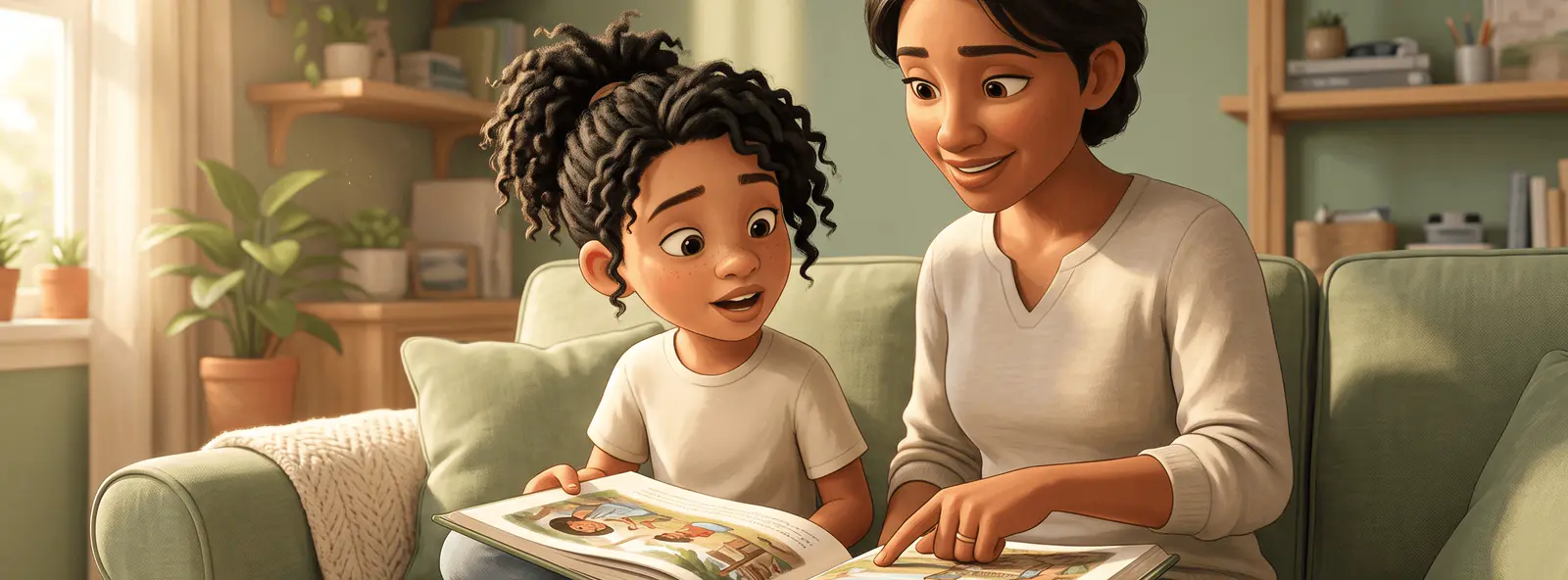

Dyslexia doesn't just mean reading more slowly. It damages something more subtle: the desire to open a book. A child who takes eight minutes to decipher a page ends up associating reading with failure, then starts avoiding it, and the gap widens. It's this spiral that plays out at home, far more than the decoding itself.
This piece doesn't offer any diagnosis. It starts from what happens in the evening, on the sofa, once the therapy sessions are done.
What dyslexia actually changes
An ordinary reader ends up recognising whole words at a glance. The word "house" is no longer deciphered, it's simply seen. Yet it's exactly this automatic process that remains effortful for a dyslexic child: they keep having to rebuild words, letter by letter, long after their classmates have stopped.
As a result, all their attention goes into decoding. Little is left for understanding the story, remembering characters' names, or enjoying a twist. A child can therefore read a page aloud correctly and be unable to recount any of it, which puzzles many parents.
INSERM classes dyslexia among specific learning disorders, alongside dysorthographia and dyscalculia. These disorders are lasting and have nothing to do with intelligence or effort — a point that affected children need to hear more than once.
Why the enjoyment of reading disappears first
The mechanism is simple. The child makes a visible effort, the result still falls short of the child at the next desk, and they draw a conclusion about themselves rather than about the task. From then on, they avoid anything that looks like a book, including at home, including in the evening.
This avoidance costs twice over. Indeed, the less they read, the fewer words they encounter, and their vocabulary grows more slowly than their peers'. Stanislas Dehaene, who has studied the brain networks involved in reading, describes learning as a long process of repeated exposure — precisely what avoidance removes.
This is why the first priority isn't performance but enjoyment. A child who keeps a love of stories keeps progressing, even slowly.
Separating reading from decoding
The most useful confusion to clear up can be summed up in one sentence: listening to a story is already reading. Comprehension, vocabulary, narrative structure, imagination — all of this can be developed without decoding.
In practice, keep two separate moments at home. On one hand, reading practice, short and structured, ideally set with the speech and language therapist. On the other, bedtime stories, where the child simply listens without producing anything. Never mix the two: the moment of pleasure must not turn into a disguised test.
Besides, reading aloud together works very well. You read the narration, they read the dialogue, or just the lines of their favourite character. They take part, they play a role, and the effort stays manageable.
What really helps a dyslexic child at home
Audiobooks have a poor reputation among some parents who see them as a shortcut. Yet they do the job of exposing children to vocabulary and sentence structure, and they give the child access to stories suited to their age. Listen together, following along with a finger now and then, without turning it into an exercise.
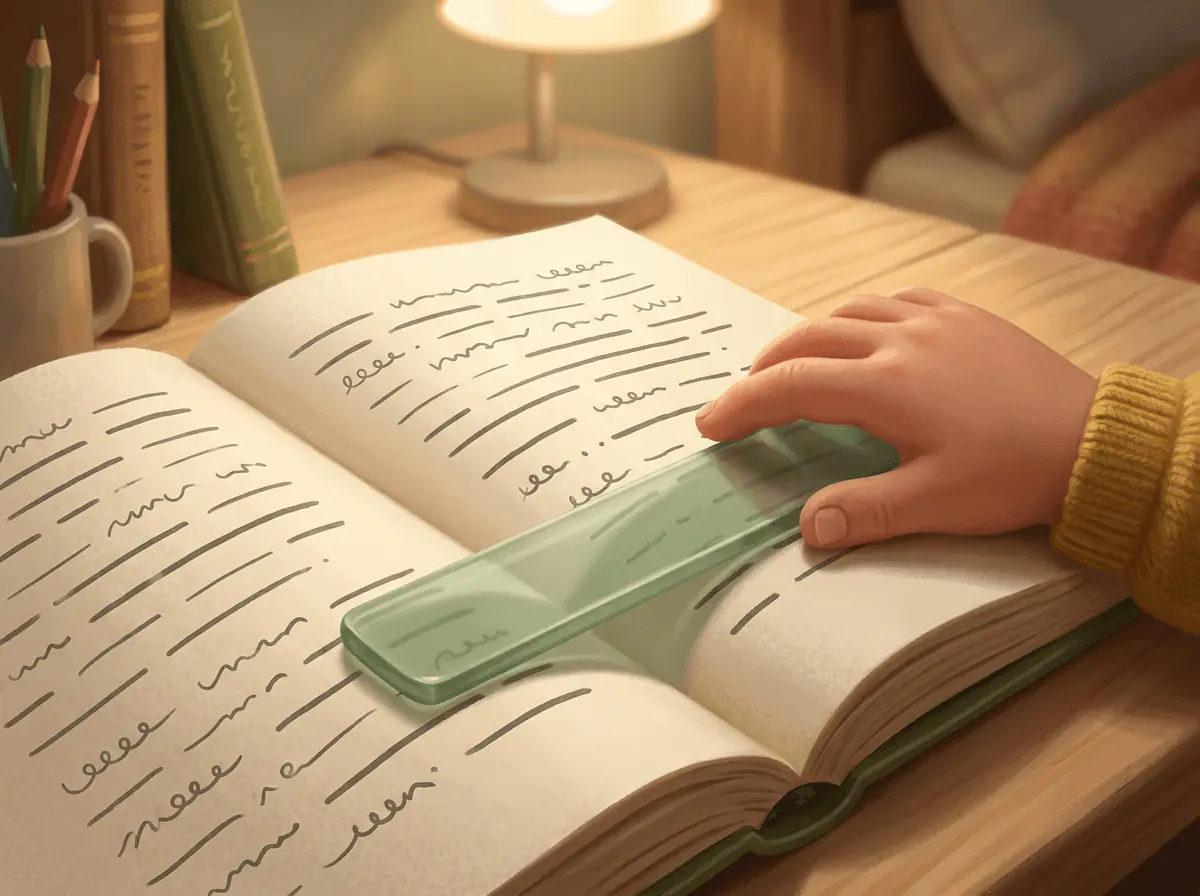
As for practical tools, a few adjustments make a real difference to fatigue: larger, more widely spaced text, a reading ruler to isolate the line, ivory paper rather than glossy white. These adjustments don't fix anything, but they lighten an already heavy effort.
Then choose short books with a genuine subject. A forty-page novel on a topic suited to their age is worth more than a picture book for younger children, which would only remind them of falling behind. In fact, many publishers now offer adapted collections, with specific fonts and line spacing.
Finally, let them reread the same book ten times. Rereading a familiar text builds fluency better than a new one, and it gives them the one thing they're missing: the experience of reading quickly.
Phrases to avoid, and ones that help
"Make an effort" and "you're reading too fast, start again" top the list of counterproductive phrases. The child is already making the effort, and pointing it out only adds shame to fatigue.
On the other hand, commenting on the content rather than the performance changes the mood. "What do you think he's going to do?" or "that one really annoys me" bring the child back into the story. Likewise, clearly saying that their brain works differently, without making a drama of it, lifts a weight they often carry alone.
Seeing yourself as the hero when reading is difficult
A dyslexic child rarely reads a story whose hero looks like them. Yet recognising themselves in a character gives them a reason to reach the end of the page — something no instruction can achieve.
Some families use stories where their child is the main character, with their own name and face. The motivation changes in nature: they no longer read to improve, they read to find out what happens to them. Real Big Stories creates this kind of story, and the text can be short without being babyish.
To understand the disorder itself, INSERM publishes a report on specific learning disorders, and the French Federation of Dys Disorders lists local associations and school accommodation procedures.
If you're looking for a short story they'll want to finish, you can create the one where they're the hero.
They may always read more slowly than their sister. It's not speed that decides whether they'll love reading at thirty.