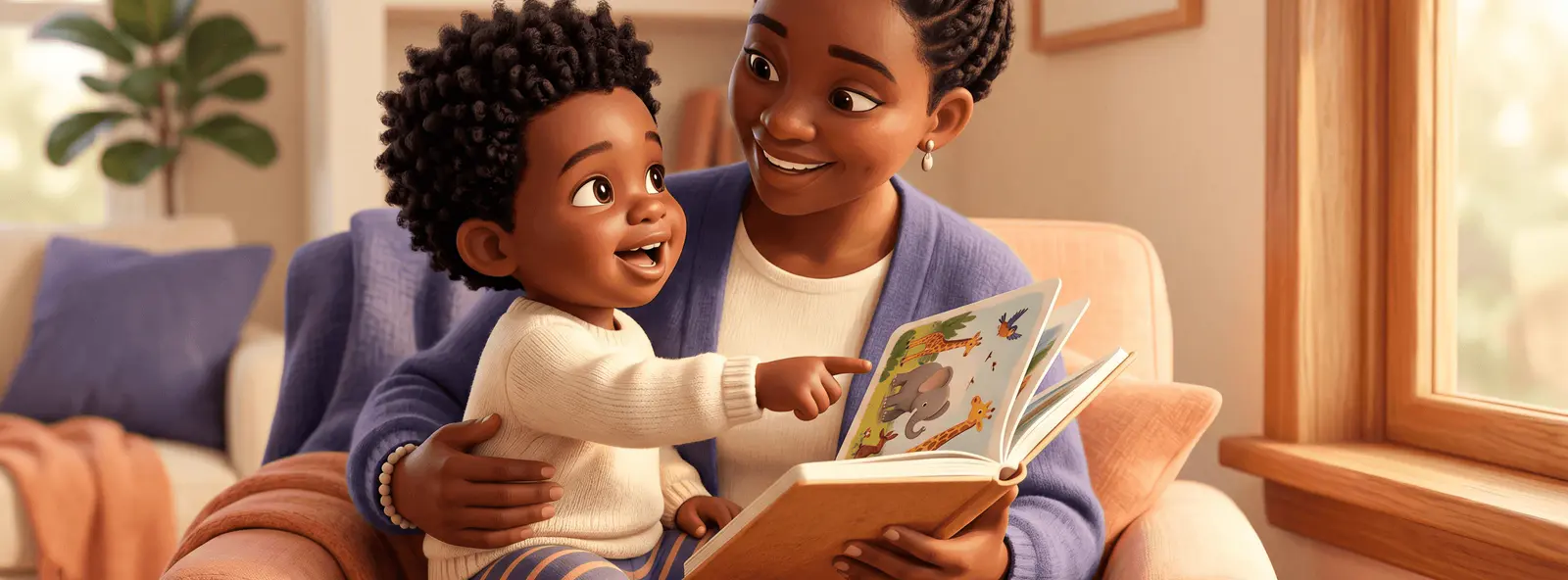

A personalised book for a 2-year-old might seem a little early. Yet at this age, something enormous is happening in their mind. Sofia, aged 2, points a finger at the page and blurts out a word. Then another. She asks for the same story for the tenth time that day, and her eyes light up when she recognises her name. It's precisely this window that early reading nourishes.
You may wonder what a toddler really grasps when they hold their story in their hands. Far more than you'd imagine, as long as you respect their pace.
At 2 years old, language explodes
At this age, a child's linguistic abilities take a spectacular leap forward. This has a direct impact on how they interact with books. Indeed, personalised stories capture attention, enrich vocabulary and strengthen family bonds.
Between 18 months and 3 years, a child's vocabulary grows from a handful of words to several hundred. In fact, according to benchmarks from Naître et Grandir, many 2-year-olds already link two words together, such as 'want biscuit' or 'daddy gone'. This period is often called the vocabulary explosion, and reading plays a direct role in it. What's more, every page turned brings new words, in a reassuring setting.
The book then becomes a training ground. Your child hears a sentence, connects it to a picture, then plays it back to you. In practice, you point to the cat, they say cat, you smile. This simple loop anchors the word far more solidly than a video scrolling past. At 2 years old, language is built through exchange, not in front of a screen.
The joy of repetition at 2 years old
If your toddler asks for the same book night after night, don't worry. In fact, the joy of repetition at 2 years old isn't a whim: it's a deep-seated need. Rereading the same story gives them a sense of mastery. In fact, they know what's coming, they anticipate the page, they finish the sentence before you do.
This anticipation delights them. It proves to them that they understand, that they remember, that they have power over the story. What's more, each reread reinforces the words and structures they've heard. A short book reread twenty times nourishes more than a pile of new titles skimmed just once. That's why a book in which they recognise themselves stands the test of time so well: they never tire of it.
Recognising themselves in their own story
Around 2 years old comes a fascinating stage. The child begins to recognise themselves in the mirror and to understand that they are a separate person. Incidentally, psychologist René Zazzo studied this self-recognition extensively, and it generally sets in around the second birthday. This is exactly where a book in which they are the hero takes on its full meaning.
When a child of this age sees a character who looks like them, who bears their name, who lives in a familiar setting, they engage in a different way. They point to the hero, then point to themselves. This little exercise fascinates them. It links what they experience in the book to what they experience in real life. A personalised book for a 2-year-old builds on this spark, without forcing anything.
Pointing and naming, toddlers' favourite game
Watch a 2-year-old with a picture book. They point, they name, they wait for your confirmation, then start again. This simple gesture is a major learning engine. By pointing, they're telling you look, and they're asking for the right word. You give it to them, and they feel proud.
A good story for this age leaves room for this game. Clear pictures, few elements per page, objects they already know. This way, they can search, find, celebrate. The story stays simple, but the book becomes a two-way conversation. It's this shared moment, more than the book itself, that stays with a toddler.
The personalised book for a 2-year-old: what works
Not all books are equal at 2 years old. A text that's too long loses their attention within seconds. Conversely, a few rhythmic sentences, a touch of rhyme, clear pictures, and the child is hooked. Here are the ingredients that make the difference at this age.
- A short text, one to two sentences per page, easy to remember.
- Their name and face, so they recognise themselves straight away.
- Clear pictures, with few elements to look at at once.
- A sturdy object, with thick pages that withstand little hands.
- A story rooted in their everyday life – bath time, their comfort toy, a walk.
Do bear in mind that every child develops at their own pace. Some talk early, others take their time, and both are perfectly fine. What matters most is shared enjoyment, not performance. A successful book at 2 years old is the one they ask for at bedtime while patting the cover.
A gift that grows with them
Many parents hesitate, convinced that such a book will soon be forgotten. This is rarely the case. At 2 years old, your child flicks through it and names the pictures. At 4, they tell you the story in their own way. Later on, they'll smile to see themselves so little. The object stands the test of time effortlessly.
At Real Big Stories, we often see families give this first book as a second birthday present, then keep it as a treasured item. If the idea appeals to you, you can create the story where your child becomes the hero, illustrated from their photo and refined by our craftspeople. A simple gesture, for a book that lasts.
To find out more about development at this age, you can consult the benchmarks from Naître et Grandir on language development from 1 to 3 years. These resources are validated by professionals and offer clear information. In addition, the public resources from the BnF on babies and books provide valuable insight to help parents.
The most beautiful thing, in the end, isn't what your toddler understands word for word. It's that moment, in the evening, when they climb onto your lap, open the book, and hold out the page waiting for the story to begin.