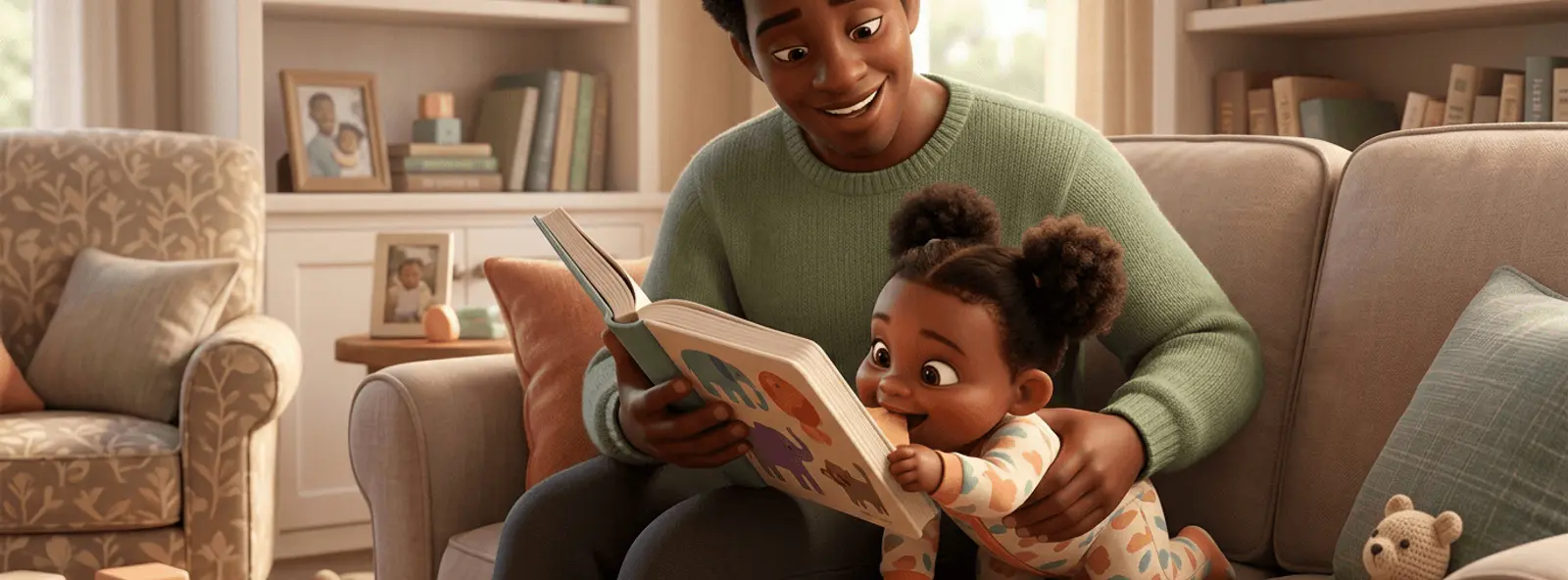

You open the book, and already your baby is off crawling, grabbing at the pages, chewing them or turning away. Reading to a baby who won't sit still can quickly become discouraging. Yet this isn't a failure: it's exactly how a little one discovers books, with their whole body. The key isn't to force them to stay still, but to adapt your approach. Here are six practical tips to make reading a joy, even with a little explorer.
No rigid method, just simple adjustments that change everything.
Why a baby won't sit still (and why that's perfectly normal)
A baby explores the world actively, which is essential to their development. Understanding this behaviour will help make reading time rewarding.
Before the age of 2, a child explores the world by moving, touching, tasting. A book is no exception to this: they handle it, turn it over, put it in their mouth. This isn't inattention, but their own way of getting to grips with the object. Indeed, expecting a baby to sit quietly and listen to a story from start to finish is asking something of them that isn't yet age-appropriate.
Understanding this takes away all the pressure. Your goal isn't to finish the book, but to create an enjoyable moment around it. From there, everything becomes simpler.
1. Read short, very short
Forget about the full story. In fact, a few pages, sometimes just one, are more than enough. Indeed, thirty seconds of shared enjoyment is worth more than a five-minute struggle. To take it further, you can read the same book several times a day, in tiny doses: it's consistency that counts, not duration.
2. Follow their pace, not the text
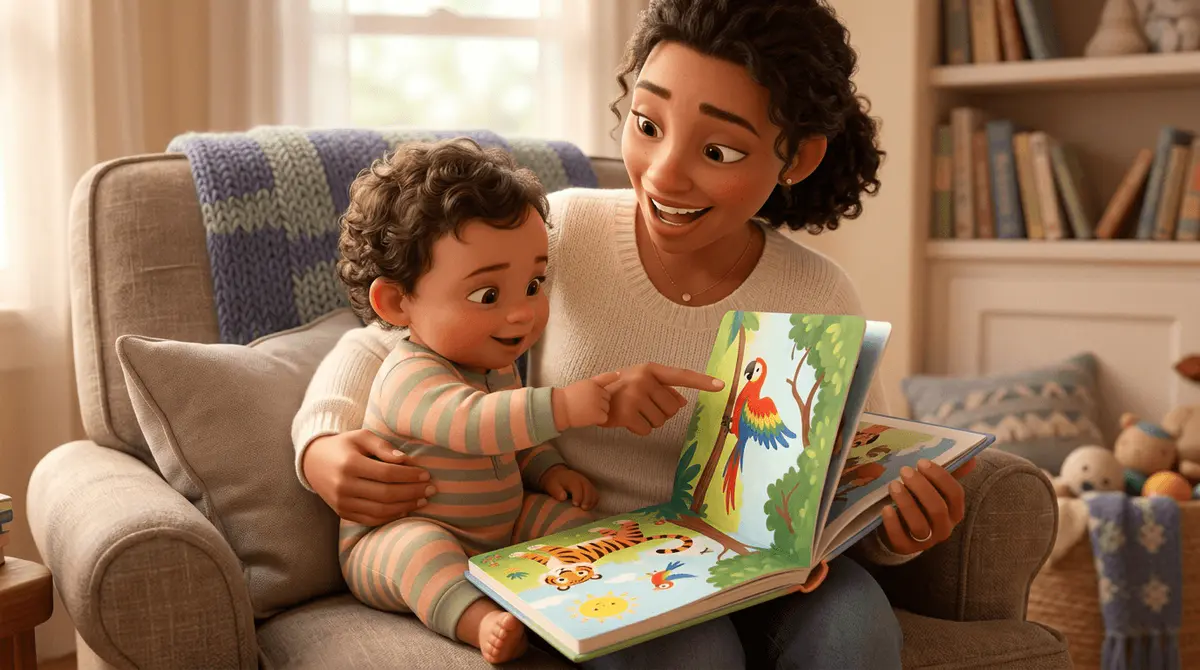
If your baby wants to skip three pages, go back, or linger on one picture, let them. Also, comment on what they're looking at rather than reading the text word for word. In doing so, the book becomes a dialogue, not a recitation, and that's precisely what nurtures their language development.
3. Choose sturdy board books
For a baby who chews and handles things, board books, cloth books or bath-safe plastic books are your best allies. Sturdy, they can withstand exploration without drama. A book that can be grabbed without fear of damaging it invites far more reading than a beautiful but fragile picture book.
4. Make the most of the good moments
Try reading when your baby is receptive: after a nap, in a calm moment before bedtime, or during a quiet break. However, there's no point insisting when they're overexcited or hungry. Indeed, good timing often makes all the difference between a failed attempt and a real moment of closeness.
5. Put your voice and body into it
A wriggly baby is captivated by voice and play. Exaggerate your intonations, make animal noises, tickle them, point things out. Indeed, the more lively and physical the reading is, the more it competes with the urge to go exploring elsewhere. That way, you become their favourite show.
6. Accept that it won't be perfect
Some days, your baby will listen to three pages, other days none at all. That's absolutely fine. What matters is that the book stays linked to a gentle, happy moment, never to a chore. By letting go of the idea of performance, you're laying the foundations for a future happy reader. To take it further, our article on the benefits of reading from 0 to 3 years will reassure you.
Reading to a baby who won't sit still isn't about training them to stay motionless. It's about supporting them in their very own way of discovering books. Read short, follow their pace, play with your voice. Above all, relax. In short, a love of reading isn't measured in pages turned quietly, but in happy moments shared, just the two of you, around a book.