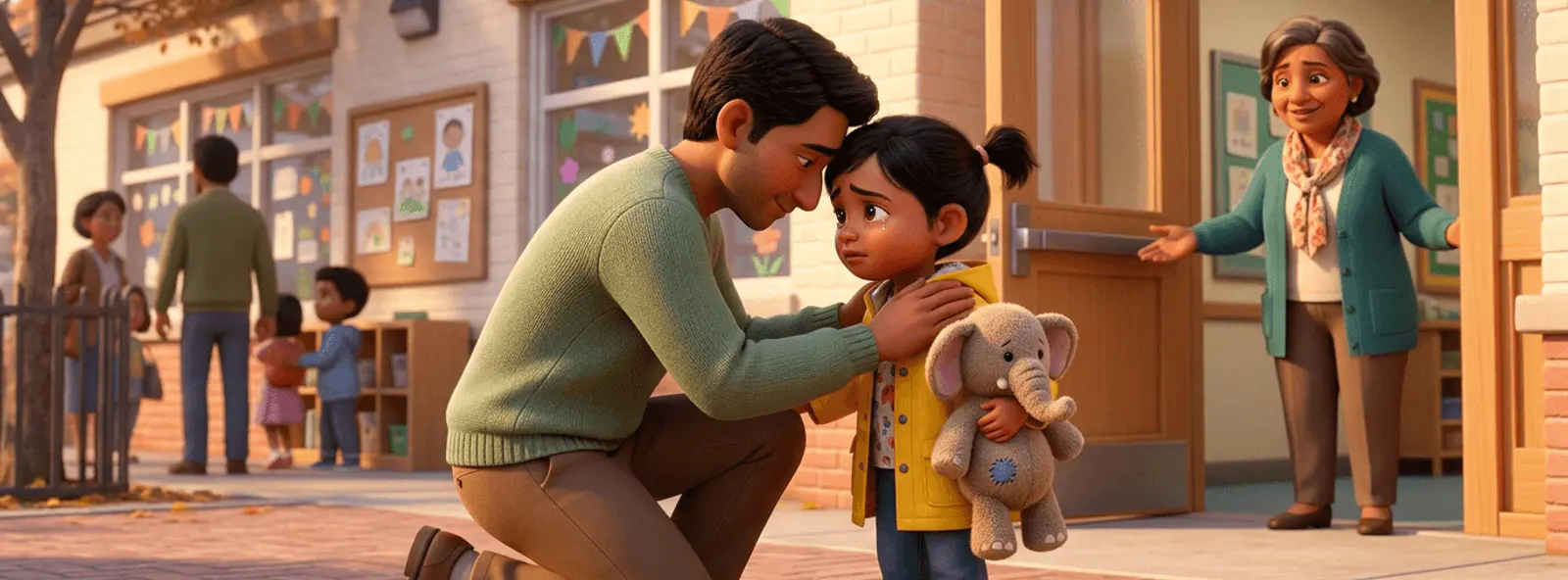

Every morning, it's the same scene: your child clings on, cries, and begs you to stay. Morning tears at the school gate are hard moments for parents, often leaving you feeling helpless. However, these tears are normal and manageable. Here's how to ease the separation, for your child and for you too.
Good news to start with: in the vast majority of cases, these tears stop just a few minutes after you leave.
Why your child cries at the school gate
Crying at the moment of separation isn't a tantrum. In fact, it's the expression of perfectly normal separation anxiety, especially in younger children. Leaving a parent for a less familiar environment stirs up the fear of being abandoned, even when the child loves school once they're through the door. It's the moment of parting, the instant of letting go, that's difficult — not necessarily the day itself.
This reaction is actually a sign of healthy attachment: your child loves you and would rather stay with you. Understanding it this way helps you avoid seeing it as a failure, either on their part or yours.

Morning tears: what doesn't work, and what we all do anyway
Some reactions, though completely natural, make the tears worse instead of easing them.
- Lingering too long. Staying longer and longer prolongs the pain and gives the impression that you might give in.
- Sneaking off. Disappearing without saying goodbye breaks trust and increases anxiety the next time round.
- Showing your own distress. If your face falls, your child understands there's something to worry about.
What these mistakes have in common is that they convey doubt. Yet what your child needs at that moment is your calm reassurance.
The goodbye ritual, your best ally
The key to a peaceful separation is a short, clear goodbye ritual that's always the same. For example, a little gesture just for the two of you, a kiss on each cheek, a set phrase, or a wave through the window. What's more, repetition is reassuring: your child knows exactly what's going to happen and that it always ends the same way, with you leaving confidently.
Clearly announce your return with a concrete marker: I'll come and get you after nap time. Then leave with a confident step, without turning back. This clean departure is hard but essential, as it shows your child that you're calm, and therefore that there's no danger.
After the separation: what really happens
What helps enormously is knowing what happens once the door has closed. Ask the teacher; almost always, they'll confirm that your child settles down very quickly and has a good day. Indeed, that intense crying at the moment of parting fades away as soon as attention turns to playing and friends.
Preparing for the separation also helps: a comfort toy in the school bag, a small photo of you, or a book where your child sees themselves as the hero who goes to school and comes back to their parents in the evening. Picturing a reassuring story at home helps ease some of that morning anxiety.
When the tears persist
Tears at the start of the school year, or after a break such as the holidays, are to be expected and usually pass quickly. But if the distress is intense, lasts for weeks without easing, or comes with other signs of unhappiness, talk to the teacher and, if needed, your doctor. Sometimes something specific is going on at school, and talking about it helps sort it out.
Morning tears at the school gate don't mean you're doing something wrong or that your child is fragile. By putting in place a reassuring goodbye ritual and leaving with confidence, you'll gradually turn this dreaded moment into a simple, everyday step. And then, one day, without warning, they'll wave to you through the window with a smile on their face.