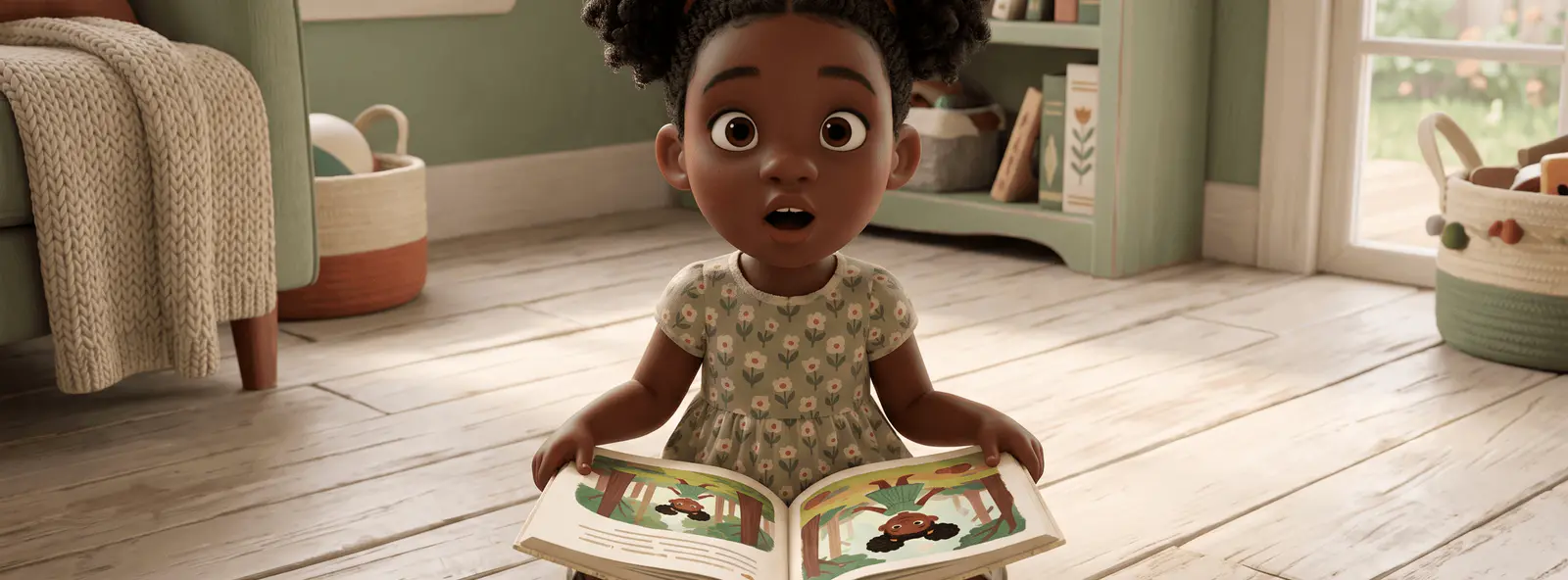

Two books can both carry the label "personalisable" and have almost nothing in common. In the first, your daughter's name simply replaces the heroine's, and not a single comma of the rest of the text changes. In the second, her face, her bedroom and her cuddly toy genuinely become part of the story. Yet the word is the same, and the gift is nothing alike.
Here are the three levels that exist today, what they actually change about the reading experience, and which one stands the test of time best.
Personalisable or personalised: the distinction that matters
The two words get used interchangeably, often at random. "Personalisable" describes what the book allows before it's made: a name, a photo, sometimes a dedication. "Personalised", on the other hand, describes the result once the book is in your hands. In practice, you search for the first and receive the second.
However, the real question lies elsewhere. It's about what the personalisation actually touches: the cover alone, or the whole story. And that's precisely where the price gap comes from — and, more importantly, the gap in the effect on the child.
The three levels of personalisation
Here are the three families you'll find in bookshops and online, summarised before we go into detail.
| Level | What changes | Typical budget | What the child notices |
|---|---|---|---|
| First name only | The first name, sometimes a dedication | €15 to €25 | Their name, once. Then nothing more. |
| Name and face | The hero looks like them on every page | €30 to €45 | They recognise themselves. They ask for it again. |
| Bespoke story | The story, loved ones, the setting | €40 to €70 | They find their own life in the book. |
Level 1: the name inserted into a fixed text
This approach has existed since the 1980s. In practice, a story is written once and for all, and a name field is slotted in at printing. Lucas becomes the little boy crossing the forest, exactly like the thousand readers before him.
As a result, the effect lasts one reading, maybe two. The child spots their name, smiles, then listens to a story that isn't really about them. For a birthday party favour, that's more than enough.
Level 2: name and face
Here, the hero has your child's features: their hair, their skin, their glasses if they wear them. Sofia opens the book and sees a little girl with curly black hair climbing a volcano. It takes her a second to understand, then she calls her dad.
This, in fact, is the exact moment most parents are looking for. Granted, the story itself remains pre-written, but the identification works, and the book keeps coming back off the shelf for months.
Level 3: a story written around the child
At the third level, it's no longer the character that's adapted, it's the story itself. The big brother appears, the cat is called by its real name, the adventure starts in the bedroom the child recognises. Yaël, eight years old, has reread hers eleven times, according to her mother.
On the other hand, this level requires more information upfront: a few photos, two or three details about family life. Allow a good fifteen minutes at the screen, not just two.
What a personalisable book will never do
None of these three levels replaces the moment of reading together. Indeed, a child whose book nobody reads to them will forget it just as quickly as any other book. Personalisation grabs attention — it doesn't hold it on its own.
What's more, the likeness has its limits. An illustration never captures a face perfectly, and a three-year-old can happily argue about the colour of their hair for ten minutes. Best to know this before ordering.
How to choose according to age
Before the age of two, hearing their name said aloud matters more than the illustration. So a sturdy board book with the name on the cover does the job — and it survives teething.
Between the ages of three and six, visual identification reaches its full effect: this is the age when seeing their own face in a book really changes something. Psychologist Isabelle Filliozat points out just how much this period shapes the image children build of themselves. After the age of eight, the story takes over from the image again, and level 3 becomes the only one that really holds up.
Our verdict, one line per level
Level 1 makes sense for a small budget or a group gift. Level 2 offers the best emotion-to-price ratio between ages three and seven. As for level 3, it's best kept for milestone occasions: a birth, a christening, a house move, or coming to terms with the end of a life stage.
If you're aiming for this final level, you cancreate the story where your child is the herostarting from their photos. To put the effect of shared reading at this age into context,Naître et Grandir tracks language development between ages 3 and 5.
One last thing to bear in mind: ask yourself what will be left of the book in five years' time. On that question, the first name alone doesn't count for much.