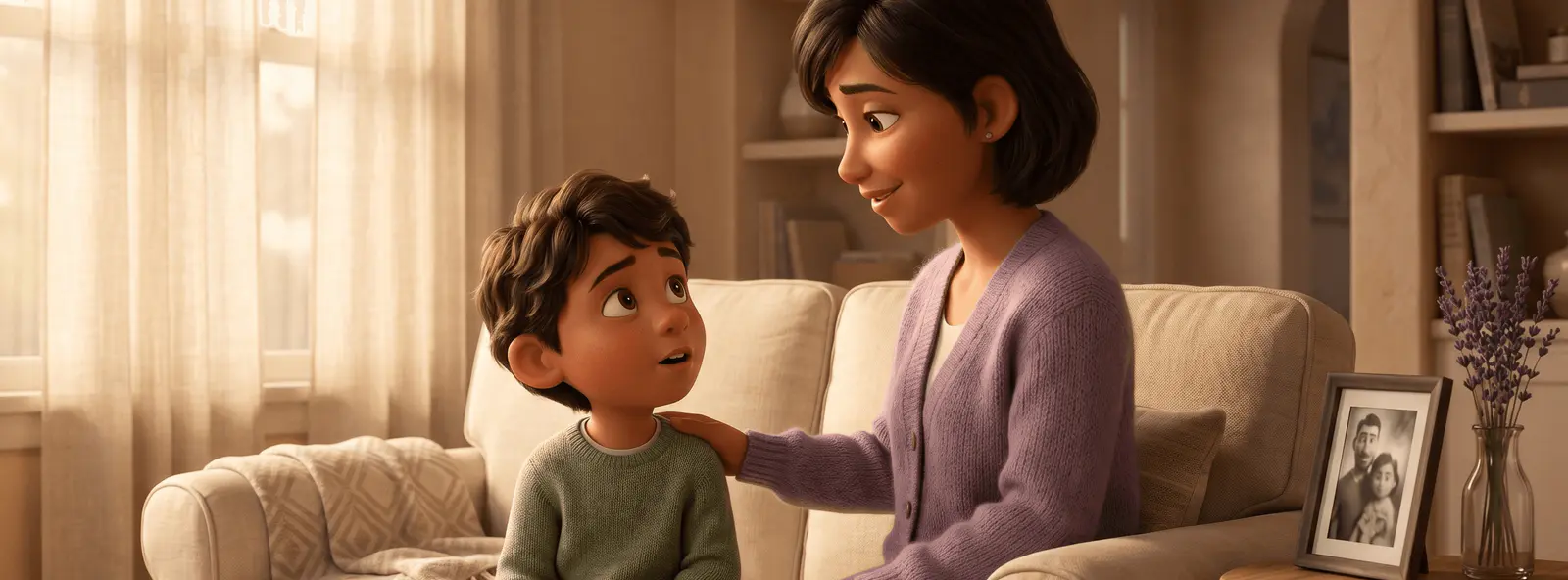

Amine's grandfather has just passed away. Amine is 5 years old. This morning, in the car, he asked you whether you, too, would die one day. You gripped the steering wheel a little tighter. Truth is, you didn't know. Nobody knows. Talking to a child about death never comes at the right moment, and it's never something anyone teaches you.
Good news: it's not about having THE right answer. It's about being available, present, and daring to say what you know, without making up the rest.
Why these questions about death come up
Between the ages of 4 and 7, your child gradually understands that death is final and that it applies to everyone, including them. Before that, they often thought of it as being like sleep, or like a journey you come back from. This shift in understanding naturally brings up questions, sometimes at the worst possible moment (at the dinner table, in the car, just before bedtime). So when a child suddenly asks whether their parents are going to die, they're not trying to upset you: they're simply trying to understand how the world works.
According to developmental psychologists, these questions about death tend to come in waves. They're often triggered by an event such as the death of a loved one, an animal killed on the road, or a scene from a cartoon. On the other hand, not asking questions isn't a problem either: some children quietly take things in before they feel ready to ask.
How to explain death, in practical terms
The golden rule: tell the truth, simply. It's best to avoid metaphors that can backfire on you ("granny has gone up to the sky" sometimes becomes "when is she coming back?"). Also avoid medical details that have no place here.
In practice, three sentences are often enough: "Granny's body has stopped working. We won't be able to see her or hear her anymore. It's very sad, and it's okay to cry." Then let the questions come, at their own pace. In particular, don't impose your own sadness on them: they'll cry if they need to, then go back to playing five minutes later, without any guilt. This is completely typical of grief in children.
Words to avoid, and words that reassure
Among the phrases that do more harm than good: "she's sleeping forever" can create a fear of sleep. "She's gone away" can create a fear of abandonment. Likewise, "she's watching us from up there" leaves things vague about what actually happened. Also avoid instructions like "be strong" or "don't cry": your child shouldn't have to carry the grief of the grown-ups.
That said, some images really do help: "her heart stopped", "her body was too tired to carry on". "We keep her photos, her stories, everything she taught us, and that stays with us." These phrases are concrete and don't deny anything.
Stories that open a door without forcing it
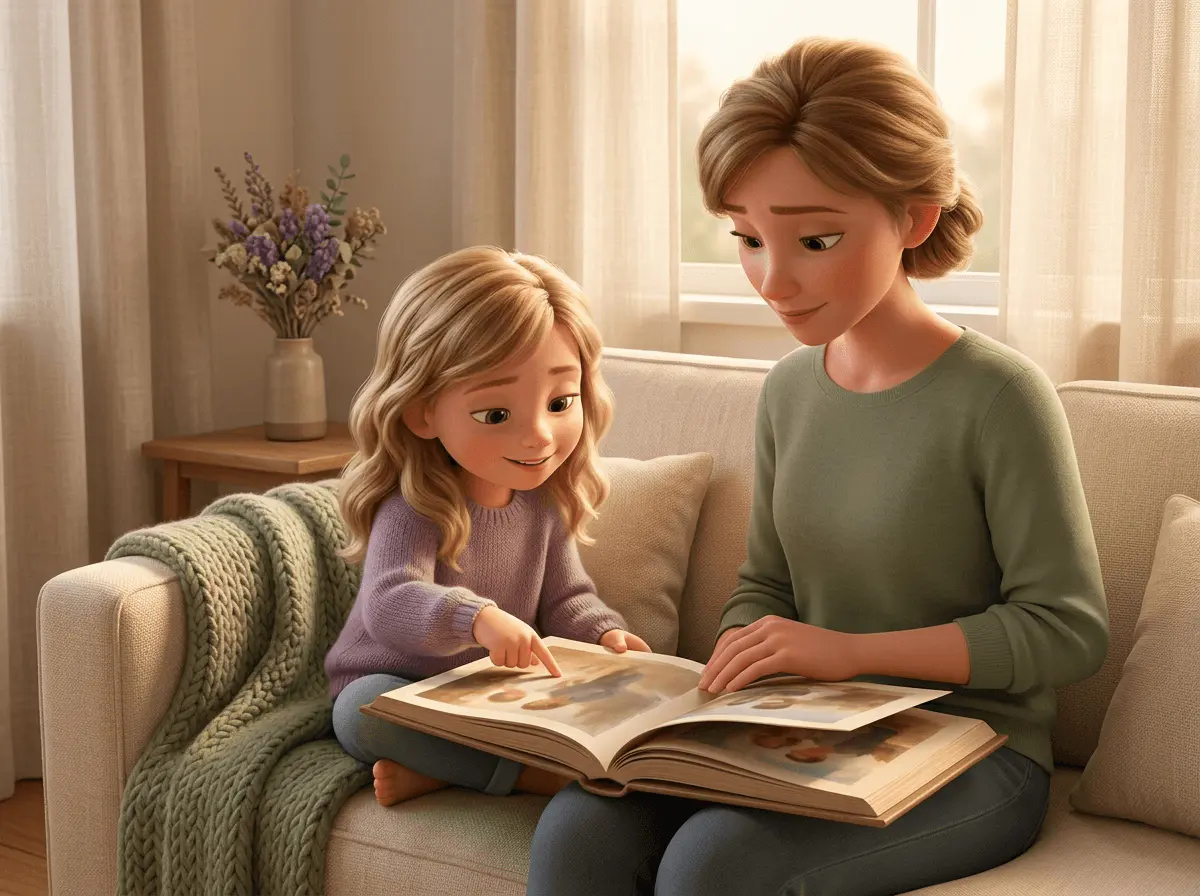
For many children, a story is the gentle detour that makes the subject easier to approach. For example, reading a book where a character goes through what they're going through (the death of a loved one, the loss of a pet) allows them to ask their questions through the character. This detour also works both ways: if the child doesn't want to talk about it now, the story will be waiting for them. And if they do want to talk, the book becomes shared, neutral, reassuring ground.
Some pillars of French children's literature on the subject include Au revoir Blaireau by Susan Varley, which deals with absence and what we pass on. Catherine Dolto's picture books on grief, or Isabelle Filliozat's books, also put simple words to big emotions. Ask at your local library for guidance on what suits your child's age and specific situation.
Grief in children: how it shows itself
A child doesn't grieve the way an adult does. They swing between intense sadness and apparent indifference, sometimes within the same day. They may regress (refusing to sleep alone, asking for a bottle again, wetting the bed). They may also ask questions that seem cold, even unsettling ("will worms eat her?"). All of this is normal.
However, certain signs should alert you, especially after several weeks: marked withdrawal from others, lasting loss of appetite, repeated nightmares, unexplained physical pain, or dark thoughts ("I want to be with her"). If you notice these, don't wait to see a child psychologist or your GP: a short course of support often prevents things from becoming deeply rooted.
To find out more
If the death of a loved one has just turned your family's world upside down, organisations such as Vivre son deuil or Empreintes offer free support to families with children. Naître et Grandir also offers a clear summary worth keeping close at hand.
For families who'd like to use storytelling as a way to bring comfort, you can also create a personalised story in which your child goes through a loss alongside a character. This kind of narrative detour helps some children put words to what they're feeling, without any pressure.
You won't always have the right words. That's okay. What your child will remember isn't what you said. It's that you were there.