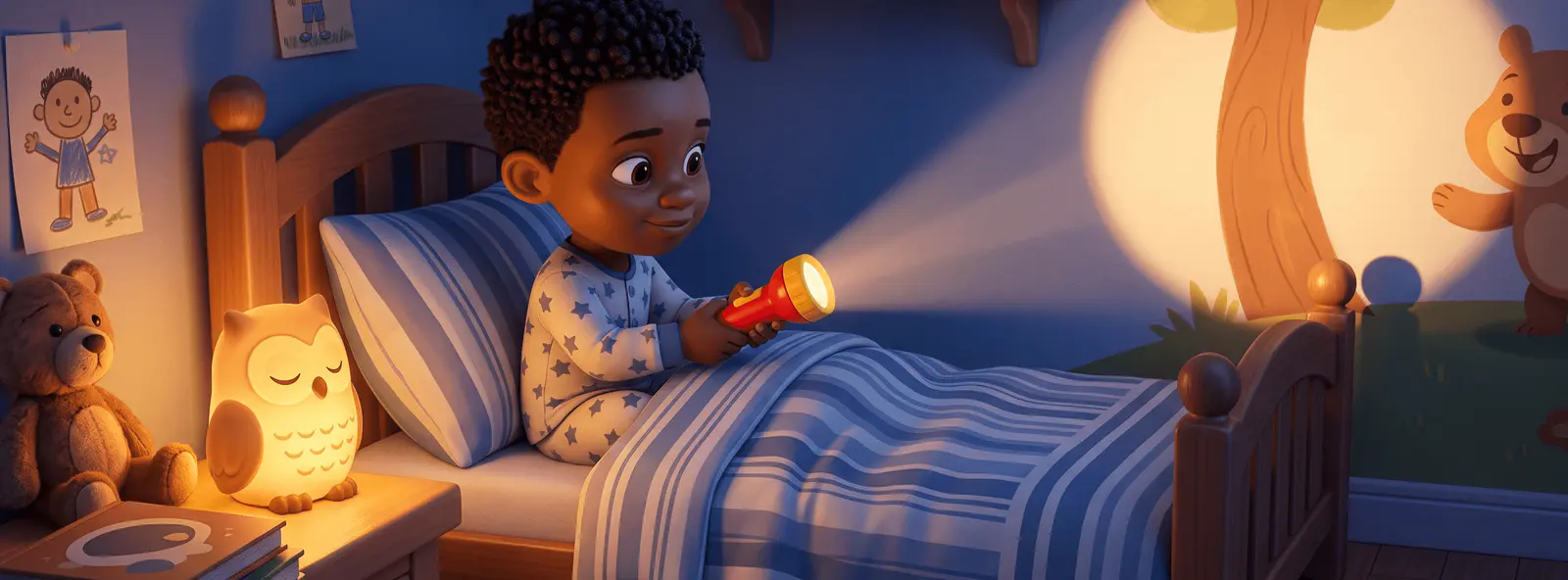

Fear of the dark often arrives out of nowhere, in a child who was sleeping perfectly well the week before. One evening, they ask for the door to be left open. The next day, it's the hallway light. Three days later, they're calling you back four times before falling asleep, and no one can work out what's changed.
Nothing has actually changed. Their imagination has simply raced ahead of their ability to calm it.
Why it appears around the age of three
Between the ages of two and four, children become able to picture things that aren't right in front of them. This is a huge step forward, and it's also what makes night-time tricky. Now they can imagine an animal behind the curtain without ever having seen one.
What's more, they don't yet clearly separate what they imagine from what actually exists. Telling them "that doesn't exist" is true, but it doesn't work: in their mind, at that moment, it very much does exist. On the other hand, this same child is perfectly capable of reassuring themselves about concrete things, which holds the key to everything that follows.
It sometimes returns later, around age six or seven, after a film, a house move or the arrival of a baby sibling. When it does, it changes shape: fewer monsters, more burglars and "what if you died" questions.
What keeps the fear going, without meaning to
Three common reflexes tend to prolong it, all of them well-intentioned.
The first is inspecting the room with the child: opening the wardrobe, looking under the bed, checking behind the curtain. But this search confirms that the room is worth searching. The child concludes that the danger is plausible, since you're looking for it.
The second is staying until they fall asleep, a little longer each night. However, the child then learns to fall asleep with you there, not to fall asleep on their own. When they wake at midnight, they call for you again because that condition is missing.
The third, more subtle one: mentioning at the dinner table that "they're afraid of the dark". Repeated in front of the cousins, the phrase becomes a label, and the child ends up playing the part they've been given.
What genuinely soothes them come evening
Start with the light, but the right kind. A night light works best when it's warm, dim, placed low down and out of direct line of sight: it beats a dimmed ceiling light. This way, the room keeps recognisable shapes, and the brain stops filling in the gaps.
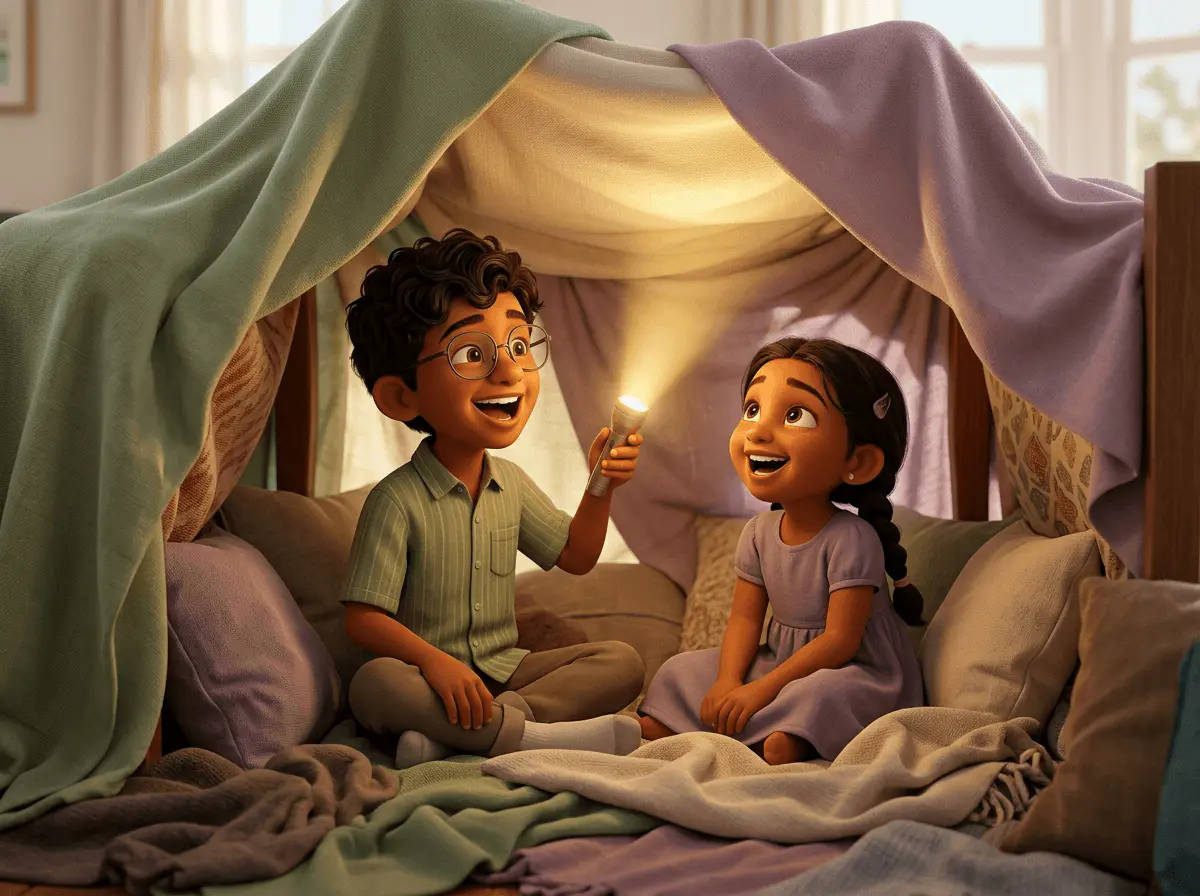
Next, give them an object of their own, with a specific purpose. Not "your cuddly toy to comfort you", but "the torch you switch on yourself if you want to check". In practical terms, the child needs to regain a sense of control over the situation, not extra protection coming from you.
Name the fear without validating it. "I can see you're scared. And I know your room is safe." This phrasing acknowledges the emotion while dismissing the scenario, which is exactly the right balance. Whereas "there's nothing there at all, stop it" shuts the conversation down, leaving the child to cope alone.
Finally, work on it during the day. Fear is best tackled at four in the afternoon, not ten at night. Play hide-and-seek in the dark, build a den under a blanket with a torch, or go on a treasure hunt with the shutters closed. Indeed, once darkness is linked to play, it loses some of its power once night falls.
The role of stories when a child is afraid
Children struggle to talk about their fears in the first person. Through a character, though, anything becomes possible: they can comment, suggest solutions, and laugh at the monster who's afraid of children.
This detour serves a real purpose. The story provides an escape scenario that the child then replays alone in their head, at the very moment you close the door. Some families go further and read a story in which it's their own child who makes their way through the dark room and comes out the other side. Real Big Stories creates exactly this kind of story.
For trustworthy guidance on fears at this age, Naître et Grandir has a dedicated feature on behaviour in 3-5 year olds.
When fear of the dark calls for outside advice
Most of these fears fade within a few weeks. However, certain signs are worth mentioning to a doctor: the child stops sleeping altogether, refuses naps too, wakes up screaming without recognising you, or the fear spills over into the daytime and stops them going to school.
A recent trigger matters too. After an accident, a hospital stay or a separation, fear of the dark can sometimes be a way in to something else, and a professional will untangle that more quickly than you can.
If you'd like them to picture themselves facing the dark hallway, you can create the story where they're no longer afraid of the dark.
In a few months, they'll walk down the hallway without switching on the light. They won't even notice they're doing it.