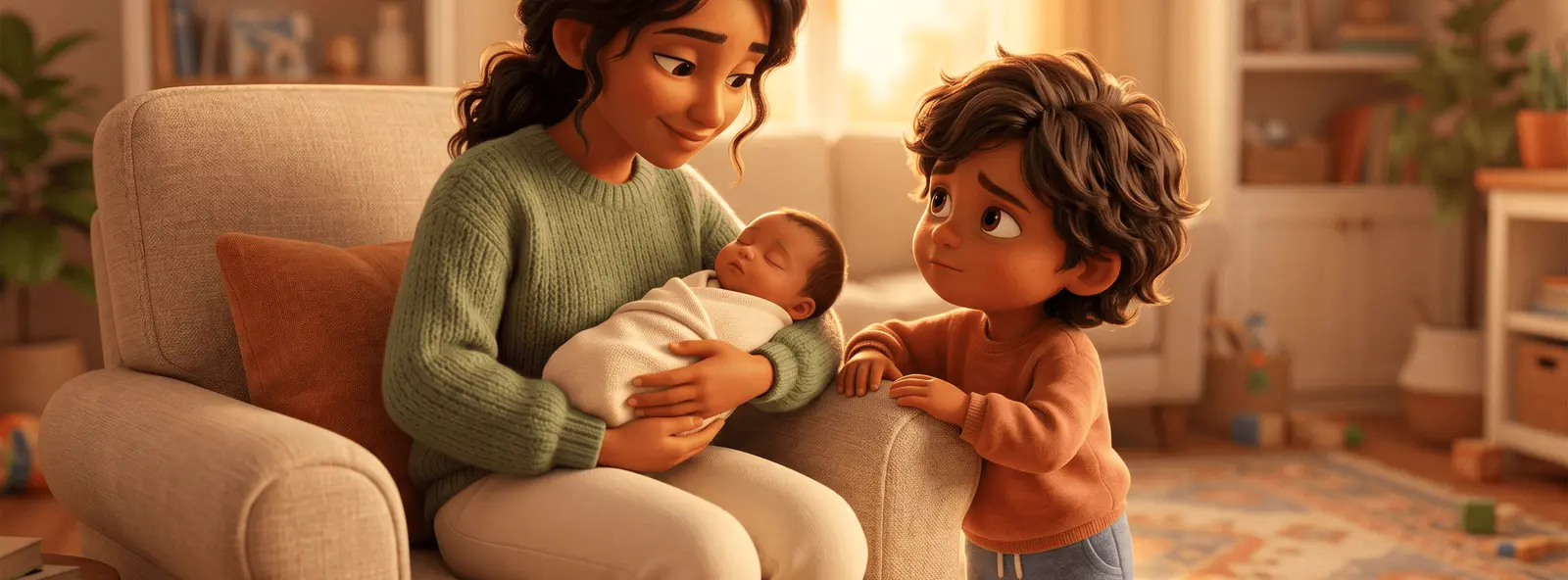

Inès, aged 3, loved putting her hand on her mummy's tummy. Then the baby arrived, and one morning she knocked over her bowl of milk, screaming. The older sibling's jealousy at the arrival of the baby had just reared its head. However, if you're going through this right now, take a breath. You haven't missed anything. In fact, your eldest isn't turning naughty: they're simply trying to work out where they fit in, now that a tiny newcomer takes up all the space in your arms.
This storm will pass. Above all, it says one thing: your eldest loves you and is a little afraid of losing you.
Sibling jealousy: a perfectly normal reaction
Put yourself in their shoes for a moment. For years, your eldest has been the centre of the world. Then, overnight, a newcomer takes up your nights, your cuddles, your adoring looks. Naître et Grandir mentions this in its article on jealousy in children: this feeling is part of normal development and affects almost every eldest child. What's more, it's neither abnormal nor worrying.
Your child doesn't yet know how to put their feelings into words. That's why they show it another way—through their body, through crying, through refusal. It's their way of telling you they need reassurance. And that, you can definitely hear.

Regression, tantrums, demands for attention: the signs
Jealousy shows itself very differently from one child to another. In some, it's obvious straight away. In others, it hides behind seemingly harmless little gestures. Here's what many parents notice in the weeks following the baby's arrival.
- A regression: Thiago, potty-trained for six months, starts asking for nappies again or wants his bottle back.
- Tantrums that flare up over nothing, often at the worst possible moment—when you're breastfeeding or changing the baby.
- Constant demands for attention: "Look at me, look at me", repeated a hundred times a day.
- Wanting to be carried again in the evening, waking up at night, more restless sleep than before.
- Sometimes, on the contrary, a child becomes unusually well-behaved, fading into the background and no longer daring to ask for anything.
None of these signs makes your child a bad big brother or big sister. They're simply cries for help. Behind every tantrum lies an unspoken "do you still love me just as much?" waiting for an answer.
Involving your eldest and giving them time all to themselves
The good news is that the gestures that soothe are simple. So, the first is to involve your eldest in the baby's life, without forcing it. Lucas, aged 4, can choose his little sister's pyjamas, sing her a song, hand you the wipes. He feels useful, proud, one of the "big kids". As a result, the baby becomes a bit of his own project, not just a rival.
The second gesture changes almost everything: time just for the two of you. And it doesn't need to be an hour, or an elaborate outing. Ten minutes a day where the baby doesn't exist, where you play, read or laugh with your eldest alone. This moment proves to them, better than a thousand words, that your love hasn't been split in two. It has multiplied.
Your love wasn't cut in half when the baby arrived. It simply found one more place in your heart.
Celebrating their role as the elder sibling, and a book just for them
A jealous child needs to feel proud again. To help with this, celebrating their role as the elder sibling works wonders. However, avoid saying "you're a big kid now", which can sound like a chore. Instead, point out what they can do that the baby can't do yet: run, talk, build a tower, give you the biggest hug in the world. Sofia, aged 5, doesn't want obligations. She wants people to admire who she's become.
And then there are the little things that help mend the heart. While the baby receives gifts from everyone, giving your eldest a book just for them restores their place as the hero. A story where they're the star, where their name and face shine on every page, tells them—without a single word—that they matter enormously too. You can even create the book where your eldest becomes the big brother or big sister hero of the story. That way, seeing themselves grow up and welcome the baby, page after page, turns rivalry into quiet pride.
At Real Big Stories, we often receive touching messages from parents who see their eldest hugging this book close. It's one form of support among many. However, it's never a magic fix. The real remedy is you—your presence, your patience.
A passing storm, and a growing bond
A few weeks, sometimes a few months, and the storm passes. One evening, you'll catch your eldest making the baby laugh, beaming with pride at their newfound power. What's more, every family goes through this, whether you're two mums, a single dad, or a big blended tribe. Jealousy never erases love. It's simply the slightly bumpy road towards a closeness that will last for years to come.
To find out more, the guidance from Naître et Grandir on welcoming a second child offers practical, professionally validated advice.
So the next time your eldest spills their milk or asks for a bottle again, remember: they're not waging war on you. They're simply asking you to keep a place for them. And that place, you already know exactly how to make for them.