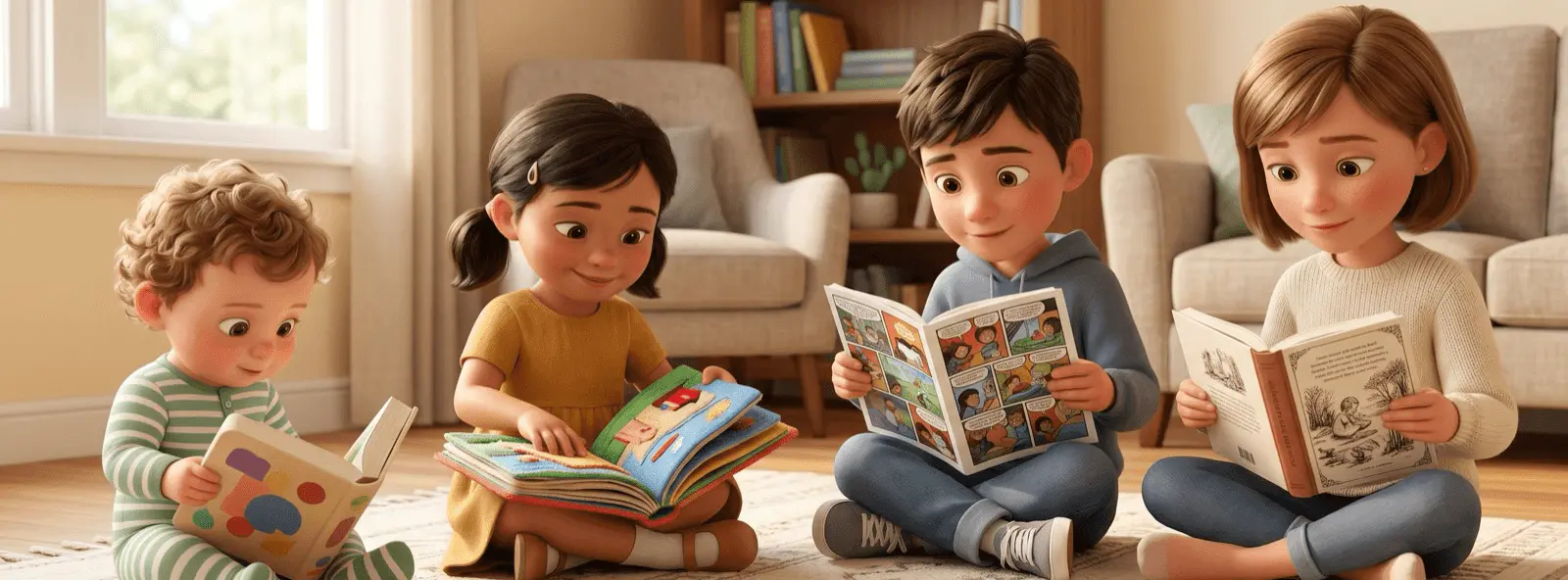

Children's favourite characters reveal a great deal about their development at different ages. It starts in early childhood and continues throughout their growing years. Inès, 2, won't be parted from T'choupi. Léa, 4, sleeps with Petit Ours Brun. Lucas, 6, talks of nothing but Mortelle Adèle. Yaël, 8, reads Harry Potter. Every age has its characters, and that's no coincidence. Here's what each age is looking for, and what your child's choices reveal about their development.
At 2 years old: the simple mirror
A 2-year-old loves characters who resemble them in everyday life. Not a hero who saves the world, but a character who eats, plays, sleeps, sulks. T'choupi, Petit Ours Brun, Caillou, Spot. These characters share three traits: a simple, recognisable shape, a daily life without great danger, and basic emotions (joy, anger, fear, hunger) that are easy to identify.
What this reveals: the child builds their sense of existing through the character. Seeing someone else go through the same things they do validates their own existence. What's more, don't underestimate T'choupi: it's one of the most powerful tools for emotional development at 2 years old.
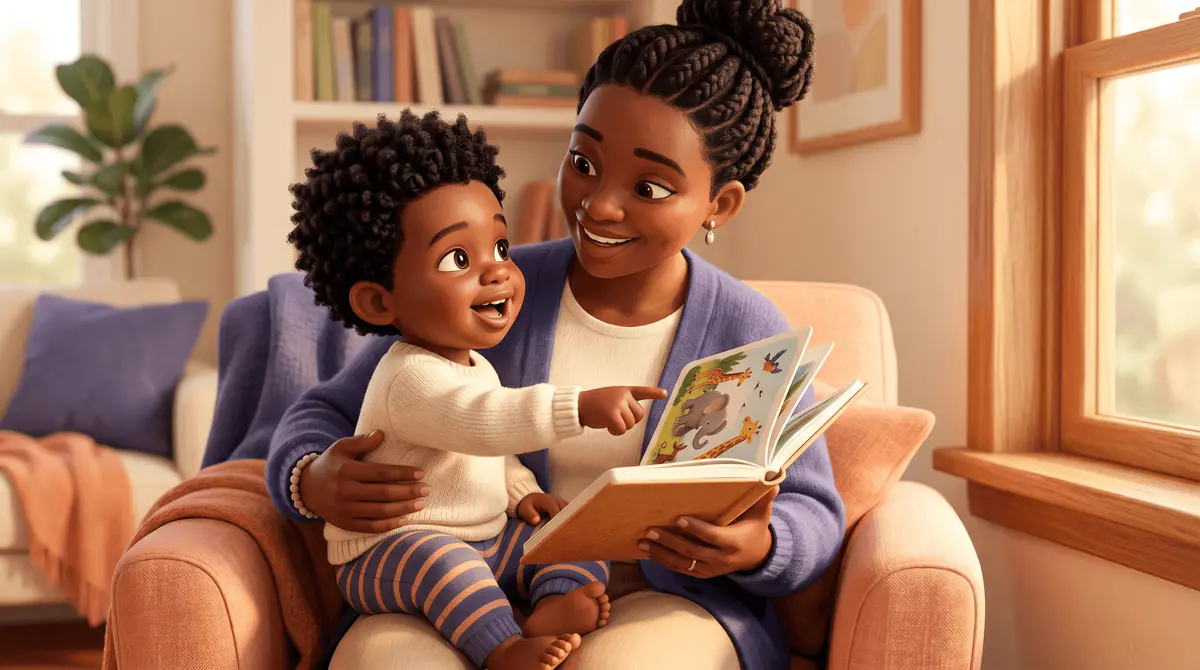
At 4 years old: the fantastical companion
A 4-year-old loves characters who carry them into worlds they've never been to, while still remaining warm and approachable. Petit Ours Brun (still going strong), Sam Sam, T'choupi (on his way out), but also Trotro the donkey, Mimi Cracra, and Orianne Lallemand's Wolf.
Common traits: an endearing character who has wild but safe adventures. No death, no traumatic separation, no irredeemable villain. The challenge is resolved by the end of the story.
What this reveals: the child is exploring the edges of their world without leaving their emotional cocoon. The character acts as a bridge between the familiar and the new.
At 6 years old: the hero who asserts themselves
A 6-year-old loves characters who assert themselves, who push boundaries, who have character. Mortelle Adèle, Anatole Latuile, Le Petit Nicolas, Splat the Cat, Pénélope Tête en l'air. These characters are no longer mirrors: they're models of self-assertion. Independence at this age matters because it allows the child to build their own sense of identity.
Common traits: a character who says no, who fails, who mocks, who disobeys, and who still comes out on top. Offbeat humour takes centre stage.
What this reveals: the child is entering the age of reason, where they begin to distinguish what belongs to the adult world from what belongs to their own. The character who pushes boundaries gives the child permission to explore their own limits.
At 8 years old: the hero who chooses
An 8-year-old loves heroes faced with moral choices. Harry Potter, Tom and Léa from The Magic Tree House, Akissi, the hero of Anatole Latuile (who moves up a level), and Roald Dahl's heroes. These characters are no longer just endearing or funny: they're placed in front of dilemmas.
Common traits: a hero who must choose between several options, who can get it wrong, who doubts themselves. Moral nuance becomes easier to grasp.
What this reveals: the child is gaining access to moral complexity. They start to understand that villains have their reasons, that heroes have flaws, and that the world isn't black and white.
What your child's choices tell you
The character your child is passionate about right now reveals their current stage of development. If Léa, 5, is still into Petit Ours Brun, she's in the 4-year-old phase (nothing to worry about, just a slight lag). Indeed, if Lucas, 6, is reading Harry Potter, he's ahead in his moral development (great news). However, if Yaël, 8, still sleeps with T'choupi, he needs to keep reassuring himself (not a delay, a need).
The classic mistake: pushing a child towards a character too advanced for their age ("you could read Harry Potter at 5"). The mismatch between content and maturity creates a feeling of failure, not achievement.
When a character becomes a lasting object of identification
Some children keep a favourite character for years. This staying power isn't a delay: it's a healthy form of narrative attachment. The character becomes an identity marker that outlasts the phases.
Lasting attachment to a favourite character may seem surprising, but it plays a key role in a child's development. By identifying with a character over time, the child strengthens traits that are truly their own, bringing stability and security to their emotional growth.
According to Catherine Gueguen, these attachments to a steady character play a role similar to a comfort toy. Indeed, they act as transitional objects that help the child get through difficulties while keeping a stable sense of identification.
To find out more
For broader insights into favourite characters and development, the website Naître et Grandir offers book selections by age group with an analysis of characters.
The book where the child becomes the character
The ultimate stage of attachment to a character is when the child wants to become the hero themselves. What's more, you can create their personalised story at Real Big Stories, where your child takes the place of the character and lives the adventure in the first person. At 4, it's a gift that touches deeply. At 8, it's a keepsake.