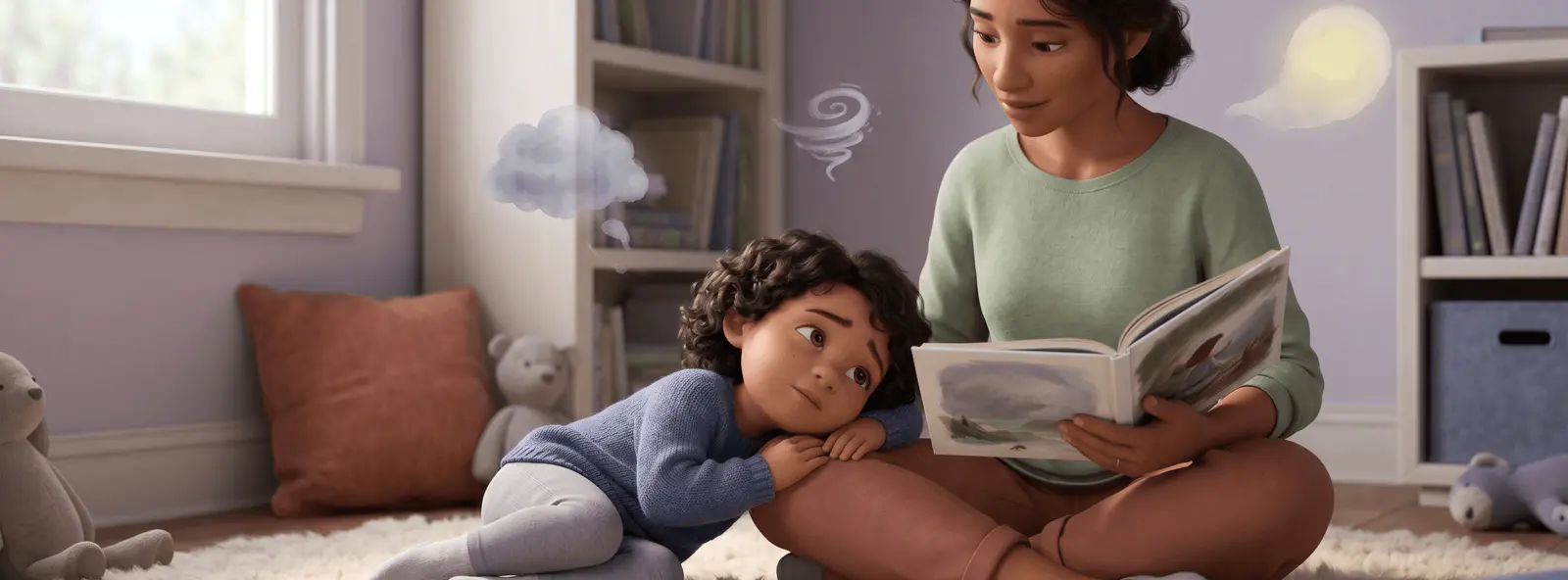

First, Léa, aged 4, throws her cup on the floor, bursts into tears, and refuses to speak. Sophie has tried everything: breathing exercises, the usual soothing phrase, a cuddle. However, nothing calms her down. That evening, in bed, she opens a book where a little girl goes through a huge tantrum and watches it "pass like a storm moving away". Léa listens in silence. The next day, she says for the first time, "I had a storm in my tummy."
Helping your child manage their emotions isn't about suppressing them. Rather, it's about teaching them to name their feelings, to welcome them, and to see that they pass. What's more, books do this work better than many methods, through a precise mechanism that neuroscience helps explain.
Why words calm the emotional brain
Catherine Gueguen, in her work on affective neuroscience, shows that when a child puts words to an emotion, activity in their amygdala decreases. This area of the brain triggers fear, anger, and sadness. Without words, the emotion remains a vague bodily storm. With words, it becomes an experience that can be named — and therefore mastered.
However, the trouble is that at ages 3 to 5, these words don't come on their own. A child doesn't tell themselves "I'm frustrated": they cry, they hit, they get agitated. So it's up to the adult to lend them the emotional vocabulary, and storytelling is the most effective way to do this.
How a book lends your child its words
Isabelle Filliozat puts it simply: a hero who feels an emotion in front of the child offers them a mirror. "The little bear was very angry" puts a precise word on what Léa was feeling. By hearing these phrases again and again, she makes them her own. A few months later, it's her turn to say "I'm very angry."
The story does something else too: it shows that the emotion eventually passes. The hero cries, then calms down, then carries on with their day. It's this narrative structure (rising, peak, return to calm) that reassures the child that their own emotional storms are only temporary.
Helping your child manage their emotions by age
From 1 to 3 years old, very simple emotion picture books are enough (The Colour Monster by Anna Llenas, Mes émotions by Stéphanie Couturier). The child points, and you name the feeling. No complex storyline is needed, just the word-image-face association.
From 3 to 6 years old, storybooks take over. The Colour Monster, Grosse Colère by Mireille d'Allancé, The Wolf Who Learned to Control His Anger. The child follows a character through a whole emotion, not just its name.
From age 7 and up, short novels allow for a more nuanced approach. Emotions become layered, even contradictory. A character can be sad and proud at the same time. It's this complexity that independent reading helps to enrich.
How to introduce the book at the right moment
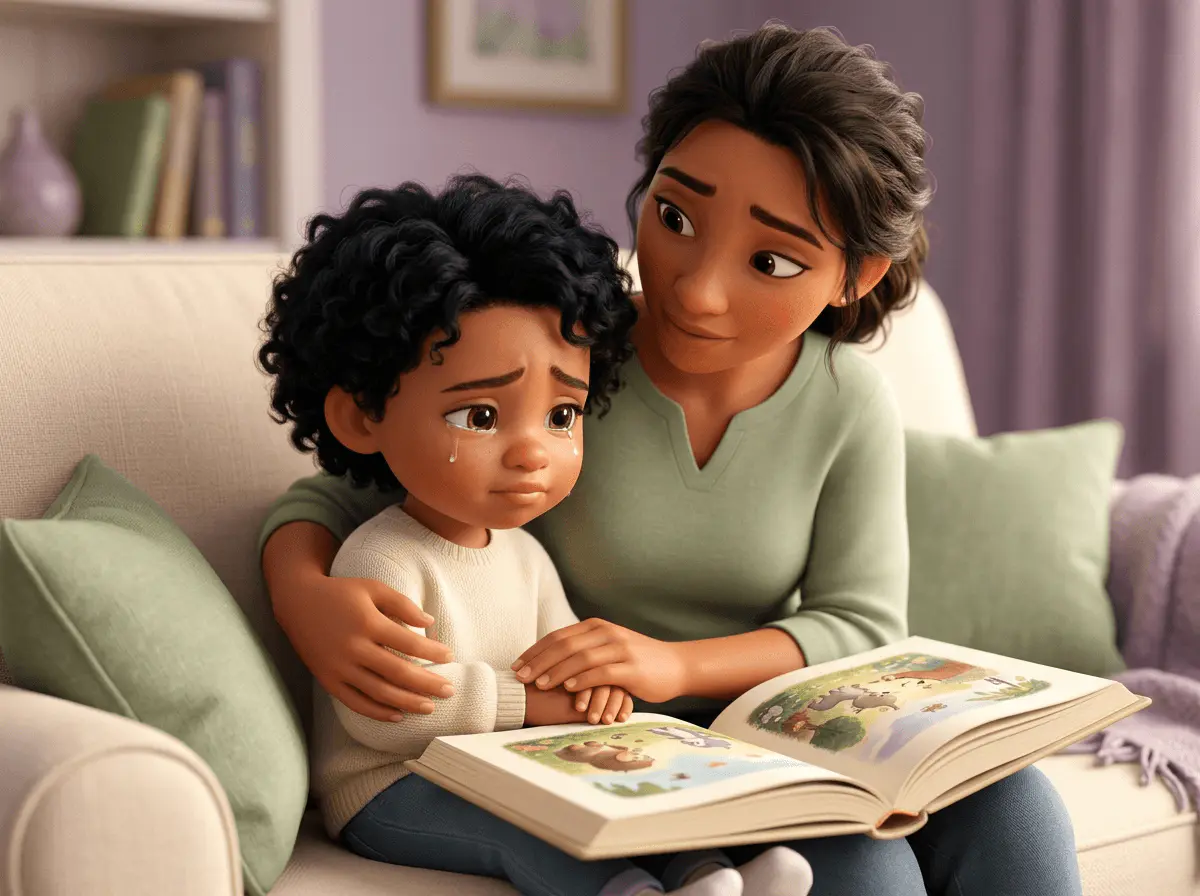
Not during the meltdown. In the middle of a tantrum, your child isn't in a state to listen to a story; they need to be held close, to breathe, to calm down physically, body against body. The book comes afterwards, once the storm has passed. The next evening at bedtime, you might say, "Do you remember your big tantrum yesterday? Look, the little rabbit had a huge tantrum too."
Lucas, aged 5, didn't want to read the book the first time. His mum left it on the bedside table. Three days later, he brought it to her himself. At this age, you don't force anything — you simply open a door.
What the book doesn't do
A book is not a therapeutic tool. If your child goes through very frequent emotional meltdowns that are getting worse, and are accompanied by other signs (regression, refusal to go to school, sleep problems), you should seek professional advice. The website 3 à 5 ans de Naître et Grandir offers guidance for telling the difference between an age-appropriate emotion and a difficulty that warrants a visit to a child psychiatrist.
The book does something else, and it's precious: it opens the door to conversation. After reading, children often ask freer, more open questions than they would in the heat of the moment. Why was the hero crying? And you, Mummy, have you ever had big tantrums? These conversations are often worth even more than the reading itself.
When the hero really looks like them
Books where the child is themselves the main character strengthen this effect even further. Seeing Inès go through a fear in a book where she's called Inès, and overcome it, sends a far more direct message than a generic character would. Identification happens instantly, and the emotional benefit sinks in faster.
If this idea speaks to you, you can create their personalised story at Real Big Stories using their photo and first name. Several themes cover common emotions (anger, fear, sadness, separation) without dismissing what the child is feeling. The rest comes down to that steady presence, book open on your lap, lending your child the words they're missing so that, one day, they can use them all on their own.