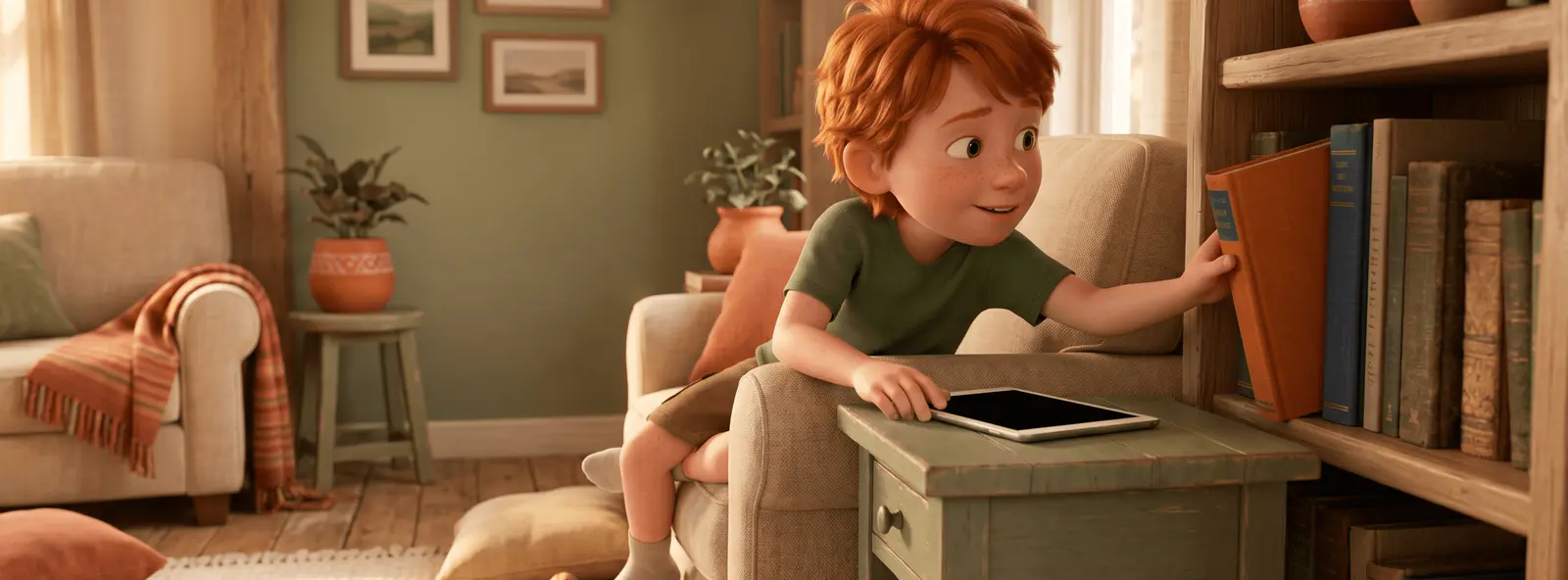

Inès is 9 years old. She used to devour her bedtime stories. Lately, though, she can't put the tablet down, and her mum wonders how to bring back her love of reading for a child who seems to have turned the page. If this scene feels familiar in your own living room, take a breath. It's not a disaster, and it's not your fault.
The idea isn't to declare war on screens. After all, they're part of our children's lives, and they have their place. The goal, though, is to bring books back into the running, to make them desirable again. Here's what works, based on what we've seen and what families tell us.
Why your child prefers the screen, and why that's nothing to feel guilty about
A screen responds quickly. It moves, it makes noise, it rewards within seconds. A book, on the other hand, asks for a bit of effort at first: getting into the story, picturing the faces, holding the page open. So after a tiring day at school, the easiest path often wins out.
This doesn't mean your child has lost their taste for stories. In reality, they've just picked up a simpler habit. Child psychiatrist Serge Tisseron actually offers clear guidelines with his 3-6-9-12 rule, encouraging us to think about screens according to age rather than demonising them. So the book hasn't vanished from the house — it's just waiting for its place to be made again.

Rekindling the love of reading by leaving good books lying around
The first lever is almost too simple. Put books where your child's eyes naturally land: on the coffee table, near the sofa, in the bathroom, in the car. Not neatly lined up on a high shelf, for instance. They need to be visible, open, and within easy reach.
A child who's bored for five minutes will pick up whatever's nearby. If it's a funny comic book or a book about dragons, they'll open it without even thinking. Mix up the genres too: non-fiction, comics, books where they're the hero of the adventure, joke collections. Reading for pleasure doesn't have to mean a classic novel to count.
Reading yourself: the gesture that speaks louder than any lecture
Children copy what they see, not what they're told. So if your child sees you glued to your phone all evening, the message gets through loud and clear. But if you pick up a novel for ten minutes on the sofa, the message changes. You're showing that reading is a grown-up pleasure, not a schoolchild's punishment.
Talk about what you're reading, too. Share at the dinner table the passage that made you laugh, or the thriller keeping you up at night. Thiago, aged 7, asked for a book about pirates after watching his dad chuckle away over an adventure novel. Curiosity is contagious.
The book where they're the hero, to reignite the spark
Sometimes a stronger spark is needed. A child who recognises themselves in a story reads it differently. They turn the pages to find out what happens to them. Their name, their face, their world: everything draws them towards the next page.
It's one of the loveliest bridges between screen and book. Indeed, with a book where your child becomes the hero of their own adventure, you're giving them a story that's all about them. Many parents tell us their child read it three times in the first week alone. Real Big Stories exists precisely for that moment when a door reopens.
Reading together, voice by voice, and other everyday tips
Reading together removes the solitary effort that puts children off. What's more, you read a paragraph, then your child reads the next one. Each of you takes on a character's voice. For a child who's still learning to decode words, this shared reading turns a chore into a game you play together.
A few other simple habits can help rekindle the love of reading, day by day:
- Let them choose their own books at the bookshop or library, even a title that seems silly to you.
- Accept re-reading the same book a hundred times over: repetition is reassuring and helps the pleasure take root.
- Keep ten minutes for reading before bedtime, with screens switched off for a while beforehand.
- Offer comics and manga without raising an eyebrow: these count as proper reading too.
Never use reading as a punishment
This is the mistake that closes the door for a long time. Turning reading into a punishment or a condition is the surest way to make it hateful. If reading becomes the price to pay for getting the tablet back, the child links books with being forced.
Do the opposite instead. Reading should be a treat you give yourself, not a debt you have to repay. There's no need to get everything right tonight. A story, a child who listens, and the desire comes back gently, at their own pace. The rest will follow.
To find out more, the website Naître et Grandir offers guidance on nurturing a love of reading, validated by childhood professionals.