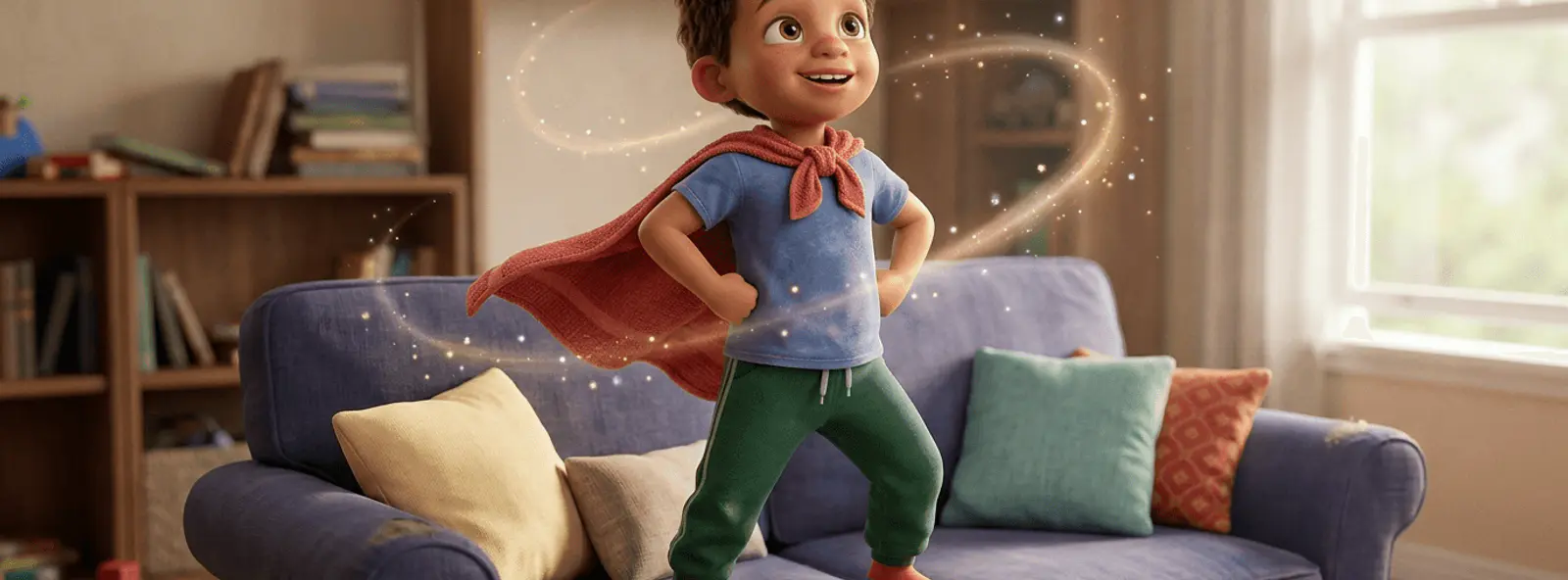

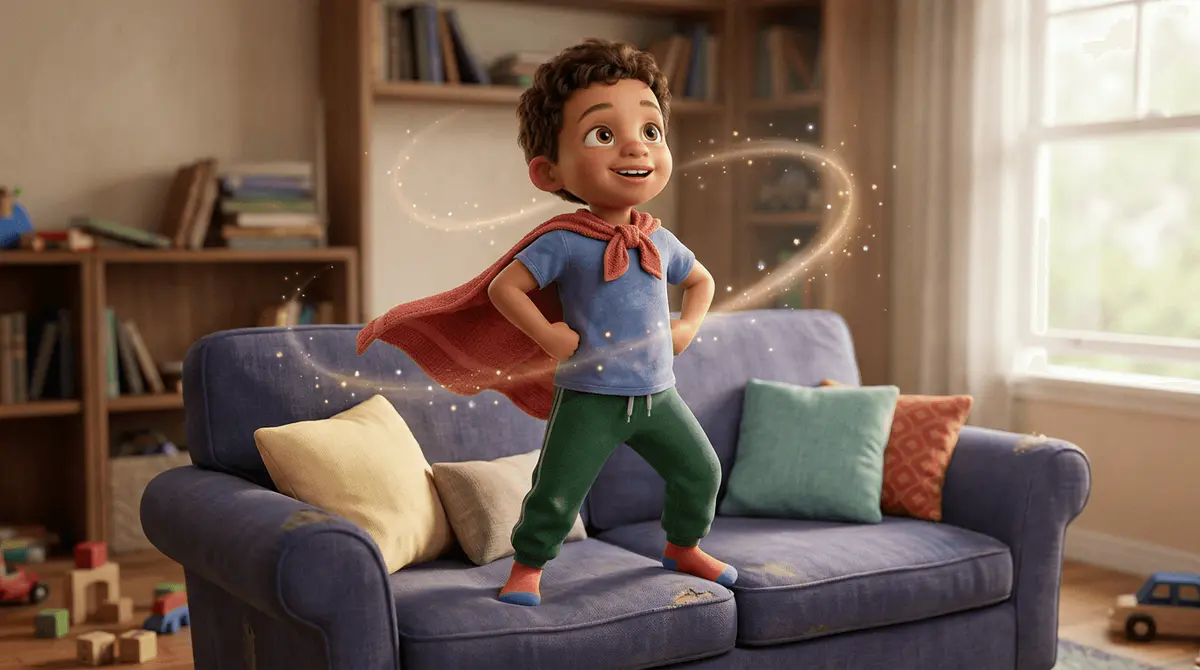
A towel knotted round the neck, a leap off the sofa, and there he goes, off to save the world. Between the ages of 3 and 8, almost every child goes through this phase. If your child dreams of being a superhero, it's not just a passing fad: this need speaks to something deep about the stage they're going through. Understanding why this world fascinates them so much helps you nurture it in the right way, rather than simply putting up with it.
Here's what this dream says about your child, and how to support it without holding them back.
Why superheroes fascinate 3 to 8-year-olds so much
At this age, children discover just how small they are in a vast world, governed by adult rules they don't yet understand. The superhero embodies exactly the opposite: they're powerful, they decide, they act. By identifying with them, the child gives themselves, for the duration of a game, the exhilarating feeling of being in control of what usually overwhelms them. It's a wonderful antidote to their everyday smallness.
So it's not violence that draws them in, contrary to what parents sometimes fear, but the power to act. The superhero is the magnified version of who they'd love to be: capable, free, and helpful to others.
Feeling strong in the face of their fears
Putting on a cape is also a way of feeling strong in the face of what frightens them. At this age, children have countless little worries: the dark, monsters, separation, the unknown. By playing superheroes, they replay these fears from a position of strength, and learn to tame them. The game becomes an emotional training ground where, at last, they're the strongest one there.
That's why this kind of play is so valuable and well worth encouraging. Far from being a waste of time, it helps build their courage and self-esteem, at an age when every imaginary victory strengthens very real confidence.
A model of goodness and courage
A superhero isn't just about strength: they defend others, right wrongs, and choose to be on the side of good. And this is precisely the age when children are building their moral compass. Identifying with a fair, courageous character helps them absorb, almost without realising it, values of protection and helping others.
You can use this to enrich the game: celebrate the hero who helps rather than the one who fights, and tell stories where strength is used to protect. To explore this further, our article on what psychology really says about superheroes looks at the topic in more depth.
When your child becomes the superhero themselves
The game takes on an even deeper meaning when a child stops imitating an existing hero and becomes their own. Seeing themselves, with their own name and face, as a brave rescuer, magnifies everything constructive about this dream: it's no longer some distant character who is strong, it's them.
This is the idea behind our personalised stories: you can create a book where your child is the superhero of their own adventure. Experiencing themselves as capable and brave, page after page, nurtures exactly what they need at this age: the confidence to face their own real-life challenges.
If your child dreams of being a superhero, rejoice: they're growing and finding themselves. Behind the cape, they're learning to feel strong, to choose good, and to tame their fears. By nurturing this dream, through play, stories and a touch of imagination, you're not creating a little troublemaker: you're supporting a child who is learning, in their own way, that they can be the hero of their own life.