

So there you are, godfather and goddaughter together for tea, and you're stumped. She's four years old, she wants to play, and you're not quite sure where to start. Should you bring out a ball? A tea set? Many godfathers ask themselves this question when faced with a little girl. And just as many godmothers wonder the same thing in front of a six-year-old boy who only talks about dinosaurs. Rest assured: this hesitation says nothing about your place in her life. It simply means nobody ever handed you the instructions.
The truth is, a strong bond isn't built on gender. It's built on time spent together, genuine attention, and a few little rituals that are truly your own. Here are some simple ideas to try from next Sunday onwards.
Why gender has nothing to do with this bond
We still hear that godfathers play football with their godsons, and godmothers go shopping with their goddaughters. Yet this way of thinking rarely matches reality. Sofia, six, adores rockets and volcanoes. Thiago, four, tidies his soft toys with the care of a librarian. A child isn't a category. He or she is a person, with passions of the moment that will change three times over before they turn ten anyway.
Child development experts talk about secondary attachment figures: those adults, beyond parents, who truly matter to a child. This includes godfathers, godmothers, uncles, or a long-time childminder. Becoming one of them has nothing to do with your gender. It comes down to one thing alone: the child knowing, deep down, that they can count on you. Psychiatrist Boris Cyrulnik often describes this foundation as a 'resilience anchor' — a steady presence to grow up alongside.
In other words, you don't need to become a princess-obsessed playmate or a sports coach. Just be yourself, available for that particular child.
Godfather and goddaughter: moving past the pink stereotypes
Let's go back to the godfather facing his goddaughter. The instinct might be to buy a doll and feel vaguely out of your depth. Forget that. Instead, ask her parents what she's into right now. Ants? Boats? Drawing? That's your shared ground right there, far sturdier than any pink or blue stereotype.
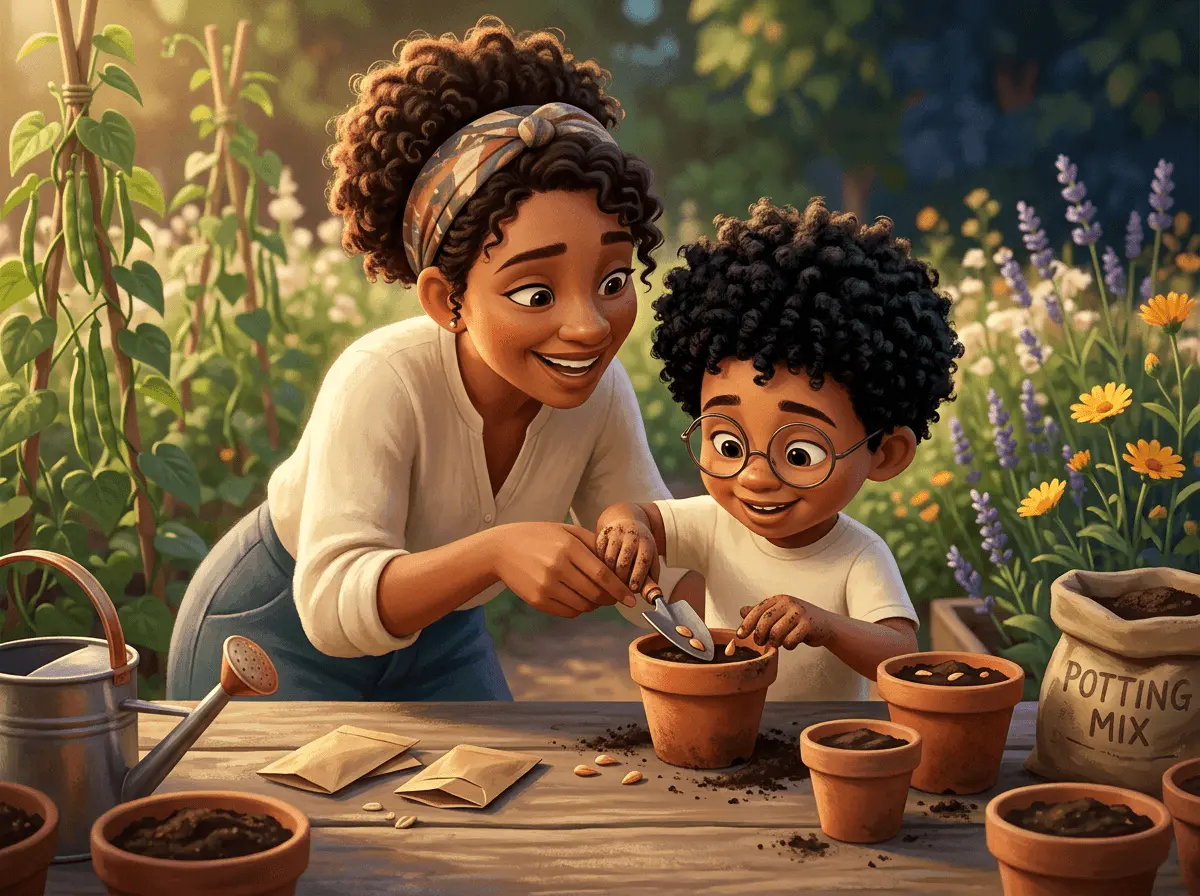
A godfather can perfectly well teach his goddaughter to identify garden birds. Likewise, a godmother can show her godson how to plant seeds. The activity itself matters little: what counts is the time you give, just for her, just for him. Not whatever's deemed 'suitable' for their gender.
Bonding moments, age by age
What works at two won't work at eight. Here are a few practical guidelines. Pick and choose, adapt them, and keep whatever suits your godchild best.
Ages 2 to 4: consistent presence
At this age, children remember familiar faces and routines. Your best tool is regularity. A short video call every Sunday, always at the same time. A nursery rhyme that becomes 'yours'. A cuddly toy you gave them, which you always ask after. Inès, two, can't yet say 'godfather', but she reaches out her arms the moment she sees you. That's already everything.
Ages 5 to 7: rituals that belong to the two of you
As children grow, they love secrets and set dates. Create a recognisable ritual. Pancakes every Wednesday. A walk where you collect pebbles. Amine, six, counts down the days until 'the outing with his godmother'. That appointment belongs to him, and he tells everyone at school about it. You become someone special in his world.
Ages 8 to 10: confidences and shared projects
As children get older, they look for an adult who is neither parent nor teacher — someone to talk to differently. Be that adult. Start a project together: a plant collection, a den, a tricky recipe. Zoé, nine, will share things with you that she doesn't say at home. Listen without judging. She'll remember this bond when she's twenty.
Godmother and godson: the same idea, mirrored
A godmother facing her godson deals with the same puzzle in reverse, and the answer is just the same. No need to master the offside rule or know every cartoon character by heart. Yaël, seven, will happily spend an hour explaining his favourite game to you. Your role? Ask questions, get things wrong on purpose, and laugh together.
A boy needs just as much gentleness and help putting words to his feelings as a girl needs adventure and challenges. By stepping away from stereotypes, you give your godchild an adult who sees them as they truly are, not as their gender is supposed to dictate.
When you doubt your place, let go of the guilt
Many godfathers and godmothers carry a nagging little voice: 'I'm not doing enough'. That voice is often wrong. Children don't count presents. They remember presence. The phone call on the night of a bad dream. The time you turned up despite the rain. The joke only the two of you share.
If you live far away, the bond still holds. A postcard slipped into the letterbox works wonders. A voice message just for them, now and then. Distance is bridged with small, repeated gestures, not one grand gesture. And every kind of family has its place here. Two godmothers, a single godfather, a godmother chosen from the heart with no blood tie: the shape doesn't matter. What connects an adult and a child is lived out, Sunday after Sunday.
A gift that tells the story of your bond
To help cement this closeness, nothing beats an item that speaks to the child themselves. A book where they become the hero of their very own adventure says something powerful: I see you, I believe in you, you matter. Your godson finds himself on every page, your goddaughter discovers she's brave and funny, and your name can even appear in the dedication.
If this idea speaks to you, you can give your godchild their own personalised story, to read together at your next get-together. With Real Big Stories, the gift becomes an excuse for the real gift: the time spent together.
To find out more about what makes an adult a true anchor in a child's life, take a look at the feature from Naître et Grandir on children's behaviour and relationships. It offers clear guidance backed by professionals.
In the end, becoming the godfather or godmother who leaves a mark takes no special talent. Just being there, again and again, in your own way. Your godchild will take care of the rest: they'll keep a place for you that no one else will ever take.